

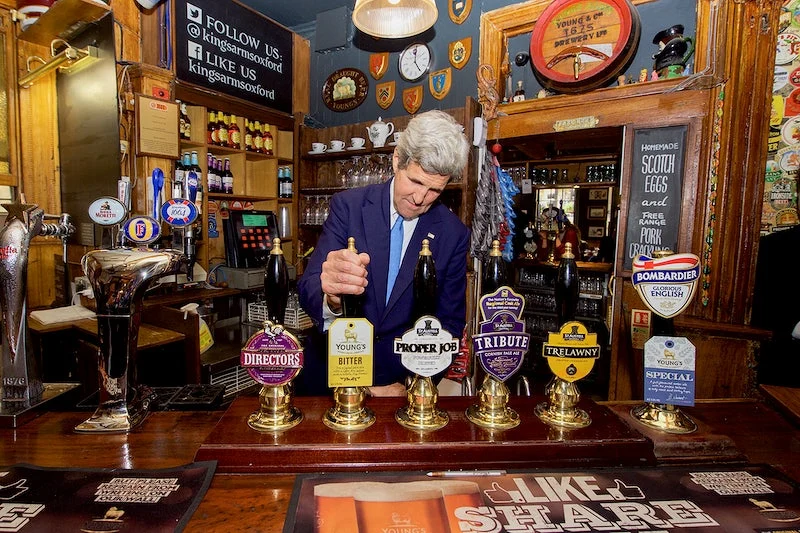
British pubs are closing at an alarming pace as costs rise faster than revenues. In the US, a softer jobs report is forcing policymakers to reassess how strong the economy really is. Meanwhile, one of the biggest stock exchanges on the planet is considering a change that could reshape how and when markets trade. Here’s what they mean for you.
🇬🇧 The Struggles Facing British Pubs
For generations, pubs have been more than just places to drink; they have been informal community hubs where neighbours meet, families celebrate, and local identity is shaped over a pint and a Sunday roast. The UK pub sector supports over 900,000 jobs and contributes billions to local economies across towns and cities. But rising costs over the past few years show a sector under significant strain. After accounting for costs like staff wages, rent, utilities, business rates, VAT and other operational expenses, many pubs are being left with very slim margins. One trade estimate cited by industry leaders suggests pub landlords may make as little as 12p net profit on each pint sold once all costs are taken into account. (qlmbusinessnews)
Seeing your local pub shut its doors is becoming a familiar sight. Recent data shows that 366 pubs closed in 2025, one every day, a stark sign of the pressures facing the trade. (The Guardian)
A central part of the challenge lies in business rates, a property tax levied on commercial premises that can account for up to 20–25% of a pub’s operating costs. Historically, pubs benefited from generous reliefs that capped the tax burden, but recent reforms reduced these discounts. Relief was cut from 75% to 40%, with some landlords facing triple-digit percentage increases in their rateable values as valuations rise. In response, the UK government has announced a reversal of planned increases for pubs, a temporary relief expected to take effect in 2026. While welcome, this measure alone will not address underlying cost pressures from rising wages, National Insurance, and energy bills.
Solving the sector’s challenges will require more nuanced policy measures. One suggestion is to reform how business rates are assessed, tying relief to turnover or profitability rather than property value, and offering targeted support on utilities, payroll, and energy costs. Combined, these steps could give struggling pubs breathing room to plan and invest, rather than simply survive week to week.
🇺🇸 US Economy Added Fewer Jobs Than Forecast
The most recent US jobs report painted a picture of a labour market that grew, but more slowly than economists expected. According to data from the US Bureau of Labor Statistics, employers added about 50,000 jobs in December 2025, notably below the consensus estimate of around 55,000–60,000. At the same time, the unemployment rate edged down slightly to 4.4%, suggesting that while hiring is subdued, workers continue to find or hold onto jobs.
The US economy is at a delicate point. Growth in the third quarter was notably strong, underscoring the underlying resilience of demand despite high interest rates. That momentum suggests the economy is not stalling, even as job creation shows signs of cooling at the margin. At the same time, inflation has eased from its highs but remains above the Federal Reserve’s 2 per cent target, particularly on a core basis. With fresh inflation figures due on Tuesday, policymakers find themselves at a delicate juncture. Rapid growth argues against easing too soon, while softer labour market data hints that restrictive policy may indeed be having a negative impact. The Fed has been clear that no single data point will dictate its next move, and this combination of strong recent growth and moderating employment reinforces a cautious approach. For now they have suggested interest rates are likely to remain on hold.
For households, slower job creation can have real effects. It may lead to slower wage growth, reduced confidence in employment prospects and tighter budgets for consumers, especially in sectors reliant on discretionary spending. If people feel uncertain about future income, they are more likely to delay big purchases such as cars and homes, in turn slowing economic growth further.
Even in the UK, a weaker US labour market has knock-on effects. British exporters to the US may see lower orders and currency markets may fluctuate in response. Investor confidence could drop, with London markets often moving in tandem with Wall Street when US data disappoints.
Could the Nasdaq Extend Its Trading Hours?
The idea of the Nasdaq stock market extending its trading hours from the current structure to nearly round-the-clock activity, 23 hours per weekday, is gaining traction. Nasdaq Inc. has formally filed a proposal with the US Securities and Exchange Commission seeking permission to operate equity trading for much longer than the present market schedule. Present market hours in the US run from 9:30 a.m. to 4:00 p.m. Eastern Time, with pre-market and after-hours sessions wrapping the core trading day. The new proposal would create a “night session” running from about 9:00 p.m. to 4:00 a.m. ET, effectively allowing stocks to trade from early morning until late at night.
Nasdaq and its supporters argue this would make US equity markets more accessible to global investors in Asia, Europe and elsewhere who currently find the standard hours outside their waking business day. Market participants could also react more quickly to news events that occur when exchanges are closed, potentially leading to more continuous price discovery and liquidity.
However, there are meaningful drawbacks and concerns. Analysts from major financial institutions have pushed back sharply, warning that nearly all-day trading could heighten the speculative nature of markets and that low trading volume overnight might result in wider bid-ask spreads and greater volatility for prices. This will disadvantage retail investors who are not equipped with real-time market insights or the risk management tools of institutional traders.
If the Nasdaq’s proposal wins regulatory approval and settles logistical challenges, including data feeds, monitoring systems, and clearing infrastructure, the change could begin in the second half of 2026. Such a shift would mark a major structural change in how global equities markets operate and raise important questions about who benefits most, long-term investors, high-frequency traders, or international participants.
💼 Unpacked
Business rates
Business rates are a property tax paid by businesses in the UK, based on the estimated rental value of their premises. They are a fixed cost, meaning they must be paid regardless of profits. For pubs, high rates can quickly squeeze already thin margins, especially when reliefs are reduced.
Non-Farm Payrolls (NFP)
Non-Farm Payrolls measure how many jobs were added or lost in the US economy in the previous month, excluding farm workers. It’s one of the most closely watched economic indicators because it signals how strong the labour market is and helps shape expectations for interest rate decisions.
Nasdaq vs S&P 500
The S&P 500 tracks 500 of the largest US companies across many sectors, offering a broad view of the economy. The Nasdaq is more concentrated in technology and growth firms. When the Nasdaq outperforms, it often reflects investor optimism about innovation and future growth. Many large US tech firms appear in both indices.
Bid-Ask Spread
The bid-ask spread is the difference between the highest price a buyer is willing to pay (bid) and the lowest price a seller will accept (ask). A smaller spread usually means more liquidity, while a wider spread signals fewer buyers and sellers and higher trading costs.
📣 Support The Fiscal Compass
If you found this breakdown useful, consider sharing it with someone who might also want clarity beyond the headline. You can subscribe to The Fiscal Compass to get future editions straight to your inbox, and follow along on social media for shorter explainers and updates during the week.
Instagram: @thefiscalcompassofficial
LinkedIn: Vinay Meisuria