

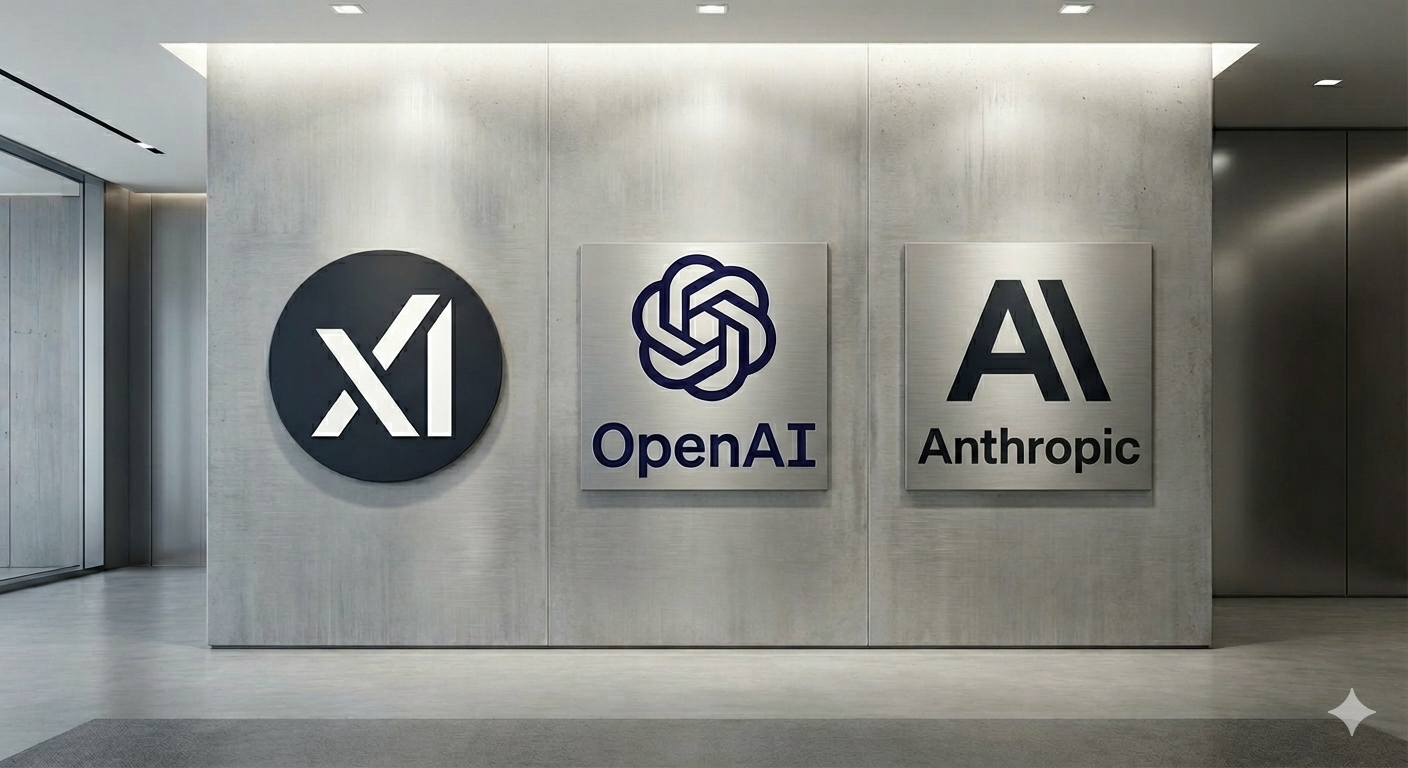
Companies that dominated early in the AI boom are now having to navigate competition, rising costs, and investor relationships. They can no longer solely focus on innovation and experimentation.
A wave of IPOs may mark the next stage of this transformation, and three firms, SpaceX-xAI, OpenAI, and Anthropic, are at the centre of a potential race to the public markets.
SpaceX-xAI
Recently, Elon Musk officially merged SpaceX and his AI startup xAI into a single entity valued at roughly $1.25 trillion, making it the most valuable private company ever. The deal brings together SpaceX’s rockets, satellite internet and broader infrastructure with data from X and xAI’s models.
The merged SpaceX-xAI entity could unlock synergies, with AI, rockets, space-based internet, and media all under one blanket. Musk argues that the electricity demands of AI cannot be met with purely “terrestrial solutions” and space-based AI is the only way to scale.
At the same time, integrating two capital-intensive operations won’t be easy, and the deal may attract scrutiny over governance and data control. It could also be seen as Musk using SpaceX to cover the losses at xAI ahead of a blockbuster IPO.
Market speculation points to a potential public listing in June 2026. Polymarket, a prediction market, currently estimates a 30% chance of a June IPO for the merged entity. If SpaceX-xAI were to list before OpenAI and Anthropic, it would anchor expectations for how public markets value AI businesses tied to physical infrastructure. Unlike pure software labs, this entity combines launch capacity, satellite networks and AI compute ambitions. That changes the valuation conversation from “model performance” to long-term revenue durability and asset ownership.
It would also absorb a significant amount of investor capital. A debut of this scale could affect the appetite for subsequent AI listings. In a market where each of these firms is likely seeking tens of billions in fresh funding, being first would carry advantages.
OpenAI
OpenAI has been at the forefront of generative AI, but its early dominance is being challenged. Google’s Gemini models are gaining traction in enterprise adoption and user engagement, while Anthropic is steadily capturing market share with a safety-first approach to AI deployment. In response, OpenAI is expanding partnerships, securing additional funding, and planning its own IPO to raise capital for further growth.
The urgency for an IPO is driven by OpenAI’s cost structure. Training and maintaining large AI models requires billions in infrastructure, including supercomputing resources and storage. Reports indicate that Amazon, Microsoft, and Nvidia are exploring further investments into OpenAI, signalling confidence in its platform and an intention to secure strategic influence over one of the most powerful AI labs. Public funding would allow OpenAI to expand its compute capacity, accelerate research, and continue commercialising its technology while remaining competitive with Google and other entrants.
Additionally, going public provides OpenAI with strategic benefits beyond immediate capital. An IPO offers transparency, and a stronger platform for acquiring top talent, which is crucial in a market where engineering and research teams are highly mobile and in demand.
Anthropic
Anthropic has emerged as a formidable competitor in the AI landscape. Its focus on safe and ethical AI has resonated with enterprise clients, differentiating it from OpenAI’s broader approach. The company has also ramped up visibility with advertising campaigns targeting OpenAI, signalling its intent to capture market attention and accelerate adoption.
Anthropic’s IPO ambitions are similarly tied to funding needs and strategic positioning. Analysts suggest that the company aims to raise capital sufficient to compete at scale with both OpenAI and Google, potentially making its listing one of the largest technology IPOs in recent history. By going public, Anthropic can secure both financial resources and market credibility, essential for attracting enterprise customers and partnering with cloud providers.
Could We See a Race?
The potential for multiple AI IPOs introduces the concept of first-mover advantage. Early listings allow firms to secure investor attention, raise substantial capital, and anchor valuations at levels that may not be replicable for later entrants. All three companies, SpaceX-xAI, OpenAI, and Anthropic, are targeting extremely large debut valuations, with estimates in the hundreds of billions, maybe even trillions.
If the first two companies go public successfully, the third may face a more challenging fundraising environment. Investors’ appetite for blockbuster IPOs could be limited, making timing and market positioning critical. This dynamic not only influences capital raising but also affects competitive positioning.
The race is also indicative of a larger structural shift in the AI industry. Companies are moving from experimental labs into scalable, revenue-generating enterprises that must balance innovation with commercial viability. The pressure to secure public funding is a natural consequence of high operational costs and intense competition.
While retail investors may not actively participate in these IPOs, the listings will have ripple effects across the market. They will influence valuations across the wider tech sector, including members of the “Magnificent 7,” several of whom have invested heavily in these three firms. As I covered in my previous piece, the Mag 7 now accounts for over 30% of the S&P 500’s market cap, so these listings are likely to affect everyone, one way or another.
For readers, understanding the logic behind these IPOs provides a window into how AI is evolving. It highlights which companies are likely to lead the sector, and why market structure and funding priorities matter as much as technological innovation.
💼 Unpacked
Anthropic
Anthropic is a US-based artificial intelligence company founded in 2021 by former OpenAI researchers. It develops large language models, including the Claude family, and positions itself around AI safety and reliability. Backed by investors such as Amazon and Google, it is one of OpenAI’s main competitors.
First-Mover Advantage
First-mover advantage refers to the competitive edge gained by being the first company to enter a new market. Early entrants can build brand recognition, secure customers, attract talent, and shape industry standards before rivals catch up, making it harder for later competitors to displace them.
Prediction Markets
Prediction markets are platforms where people trade contracts based on the likelihood of future events, such as elections, IPOs, or even award shows. Prices reflect collective expectations. The two largest platforms are Polymarket and Kalshi.
📣 Support The Fiscal Compass
If you found this insightful, consider sharing with friends or colleagues. For weekly economics-led takes on markets, policy, and macro trends, subscribe to The Fiscal Compass.
Follow along on social media for concise updates throughout the week:
Instagram: @thefiscalcompassofficial
X: @FiscalCompass.
LinkedIn: Vinay Meisuria
Sources
Featured image generated using AI.