
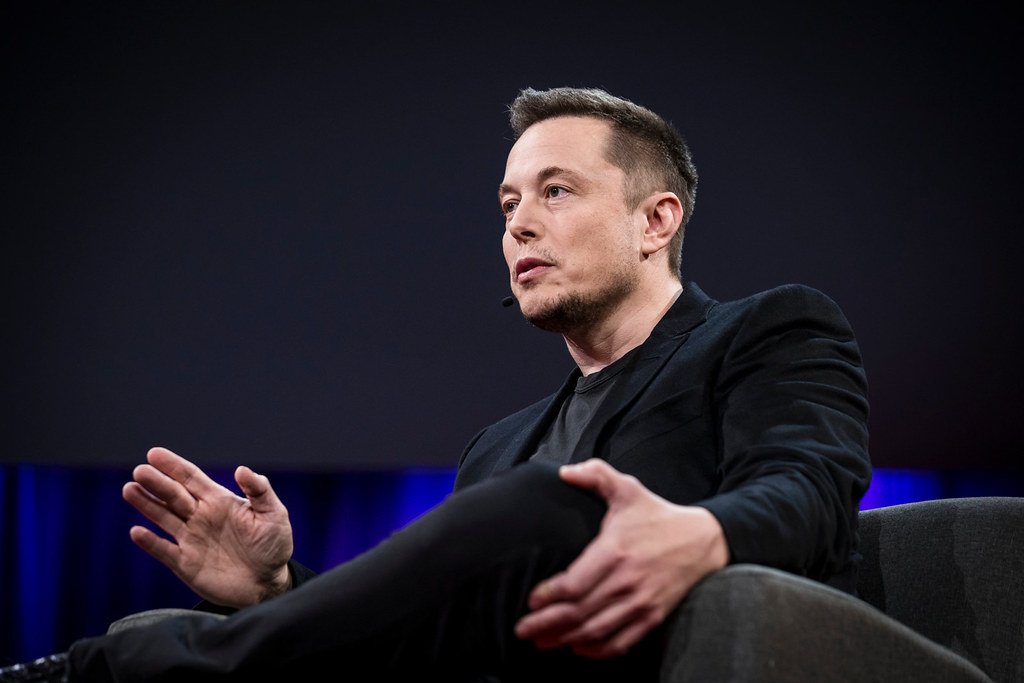
In June 2026, following SpaceX’s long-anticipated IPO, reports confirmed that Elon Musk had become the world’s first trillionaire. The milestone came after SpaceX began trading publicly at a valuation of roughly $1.75 trillion, placing it immediately among the largest companies in the world, ahead of most long-established industrial and financial giants.
The figure itself is difficult to process. Even after decades of rising corporate valuations, $1 trillion remains a number that sits far outside everyday economic experience. It is larger than the annual output of many developed economies and, more importantly, it represents wealth tied not to cash, but to ownership in assets whose value is determined by market expectations.
But the more interesting question is how it became possible in the first place.
How can one person be worth $1 trillion?
The first thing to understand is that “net worth” is not a measure of money held, but a valuation of ownership. In Musk’s case, the vast majority of his wealth comes from equity holdings, particularly his stake in SpaceX. When the company went public, it was priced at around $135 per share, implying a valuation of roughly $1.75 trillion. At that level, even partial ownership translates into hundreds of billions in paper wealth.
Estimates from early trading suggested Musk owns roughly 35–42% of SpaceX, depending on options and dilution structures. That alone places the value of his stake in the range of $600–$800 billion, before considering his remaining Tesla holdings, which still add well over $100 billion depending on market conditions. Combined, this is what pushes his net worth beyond the trillion-dollar threshold.
What matters here is the mechanism behind it. Equity markets are not backward-looking systems that price companies based on current profits. They are forward-looking systems that attempt to value future cash flows, sometimes decades ahead.
SpaceX itself illustrates this clearly. While it generates substantial revenue, estimated in the region of $15–20 billion annually, it has also operated with heavy investment spending and reported losses during its expansion into Starship, satellite infrastructure, and AI-linked systems.
Investors are not paying for what exists today, but for what they believe could dominate tomorrow. A trillion-dollar net worth, then, is less a reflection of current cash generation and more a reflection of long-term expectations priced into equity markets.
Why is wealth concentrating at this scale?
The possibility of a trillion-dollar fortune reflects a broader shift in how modern economies generate value. At the centre of this shift is scalability.
Traditional industrial growth required proportional inputs. Expanding output meant more factories, more labour, and more physical capital. Growth was powerful, but constrained by geography and resources.
By contrast, companies like SpaceX operate in sectors where scale behaves differently. Satellite networks, software systems, and platform-based infrastructure can expand globally without a proportional rise in marginal cost. Once the infrastructure exists, adding new users or contracts is comparatively inexpensive.
This creates increasing returns to scale, where success reinforces itself rather than diluting returns. SpaceX illustrates this dynamic at an extreme level. Its valuation places it not just among large companies, but immediately within the top tier of global firms, alongside Apple, Microsoft, Amazon, and Nvidia in total market capitalisation rankings.
At this level, capital markets begin to behave in a self-reinforcing way. High valuations attract more investor attention, which increases liquidity, which can further reinforce valuation expectations.
There is also an ownership effect that matters just as much as business model structure. Extreme wealth concentration is not only about company value, but about how much of that value is held by founders or early stakeholders.
In Musk’s case, significant retained ownership in multiple high-value firms means that changes in market expectations translate directly into changes in personal wealth at an unprecedented scale.
This is why trillionaires are now structurally possible in a way they were not even two decades ago. It is not only that companies are larger, but that ownership, scale, and investor expectations have become tightly interconnected.
Should we care?
The emergence of a trillionaire has triggered two competing interpretations. One view is that this reflects economic progress. SpaceX, for example, is not a speculative asset in isolation. It operates in satellite internet, launch services, and government contracting, with real-world infrastructure and measurable demand. Its expansion has also attracted significant institutional investment, including major allocations from global asset managers during its IPO.
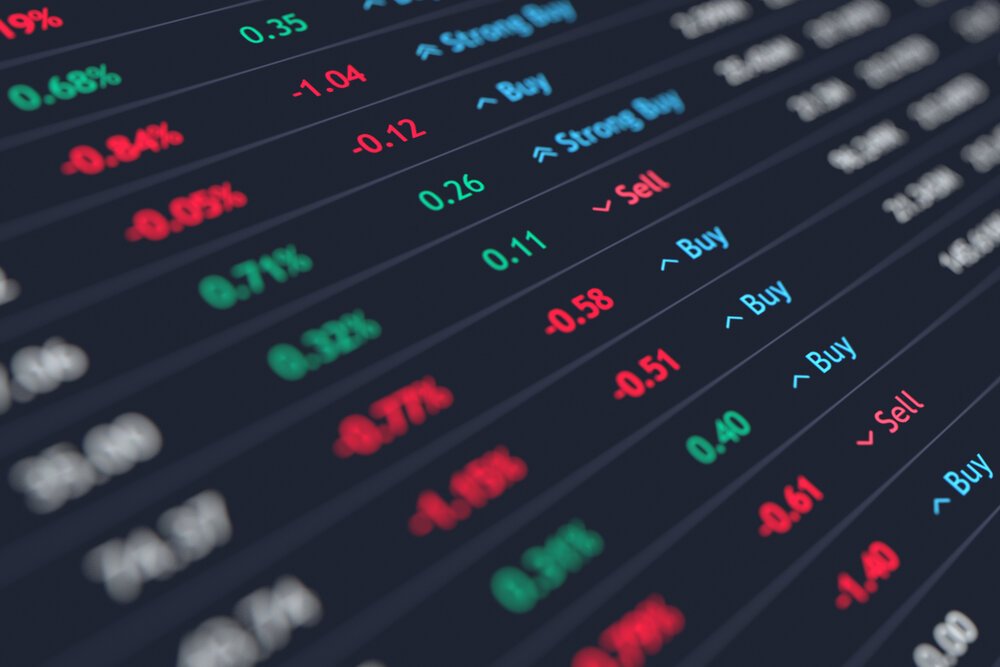
At the same time, early trading data shows how quickly sentiment can concentrate around a single asset. In the days following its IPO, retail investors purchased nearly $370 million worth of SpaceX shares, surpassing flows into several major technology benchmarks combined.
This highlights how modern capital markets are not just institutional systems, but increasingly behavioural ones. Narratives, and perceived future dominance play a direct role in pricing outcomes.
The opposing view focuses on concentration. When a single individual accumulates wealth at this scale, it raises questions about the growing influence that comes with it, alongside distribution concerns
It also raises a more technical concern. If valuations are driven heavily by future expectations rather than current earnings, then wealth at the top becomes more sensitive to sentiment shifts than traditional income-based measures ever were.
For most people, however, the more practical implication is about what this structure implies for everyday financial life. If ownership is now the primary driver of extreme wealth, then participation in growth increasingly depends on access to assets rather than income alone. That shift helps explain why housing, equities, and long-term investment vehicles have become more central to financial security than wage growth in isolation.
What Does it Mean For the Economy as a Whole?
By itself, one person’s fortune does not determine economic growth, living standards or prosperity. The milestone reflects the type of economy we have built. As technology continues to reshape industries and capital markets reward businesses with strong growth potential, questions around ownership, inequality and access to investment opportunities are likely to become even more important.
A trillionaire is ultimately a symptom of broader economic forces. Understanding those forces helps make sense of a headline that is about far more than one individual.
💼 Unpacked
Net Worth
The total value of everything a person owns minus what they owe. It includes assets such as shares, property, and cash, alongside any debts. For ultra-wealthy individuals, net worth is often dominated by the market value of company ownership rather than liquid money.
Market Capitalisation
The total value of a publicly traded company in the stock market. It is calculated by multiplying the current share price by the total number of shares outstanding. It reflects investor expectations about a company’s future earnings rather than its current cash or assets.
Equity
Ownership in a company, usually represented through shares. Equity holders have a claim on the company’s value and future profits. If the company grows in value, the value of equity increases. Founders and early investors often hold large equity stakes, which can become extremely valuable over time.
Risk Premium
The extra return investors require for taking on uncertainty compared to a “safe” investment such as government bonds. The higher the perceived risk of an asset, the higher the expected return needed to justify its price. In valuation terms, it helps explain why some companies are priced on future expectations rather than current profits.
Initial Public Offering (IPO)
The first time a private company sells shares to the public on a stock exchange. It allows the company to raise capital from investors and gives early shareholders a way to turn ownership into tradable, market-priced assets. IPOs set the company’s initial public valuation.
📣 Support The Fiscal Compass
If you found this insightful, consider sharing with friends or colleagues. For weekly economics-led takes on markets, policy, and macro trends, subscribe to The Fiscal Compass.
Follow along on social media for concise updates throughout the week:
Instagram: @thefiscalcompassofficial
X: @FiscalCompass.
LinkedIn: Vinay Meisuria
Sources
Forbes – SpaceX Soars Another 20%—Rocketing Musk’s Net Worth To $1.3 Trillion
https://www.forbes.com/sites/tylerroush/2026/06/15/spacex-soars-another-20-rocketing-musks-net-worth-to-13-trillion/
Coindesk – Elon Musk’s SpaceX prices shares at $135, raising $75 billion in largest-ever IPO
https://www.coindesk.com/markets/2026/06/11/spacex-prices-shares-at-usd135-in-largest-ipo-ever
Business Insider – Retail hype for SpaceX stock shows no sign of waning days after the IPO
https://www.businessinsider.com/spacex-stock-ipo-retail-investors-tesla-elon-musk-spcx-tsla-2026-6
Reuters. SpaceX IPO and valuation surge linked to Elon Musk becoming first trillionaire
https://www.reuters.com/business/media-telecom/spacex-ipo-makes-elon-musk-worlds-first-trillionaire-2026-06-11/
Financial Times. How private space companies are reshaping capital markets
https://www.ft.com/content/space-sector-valuation-analysis
Bank of England. Financial stability report (asset prices and equity valuations context)
https://www.bankofengland.co.uk/financial-stability-report
OECD. Economic outlook: productivity, innovation and capital concentration trends
https://www.oecd.org/economic-outlook/
Featured Image: Elon Musk speaking at TED, Flickr