

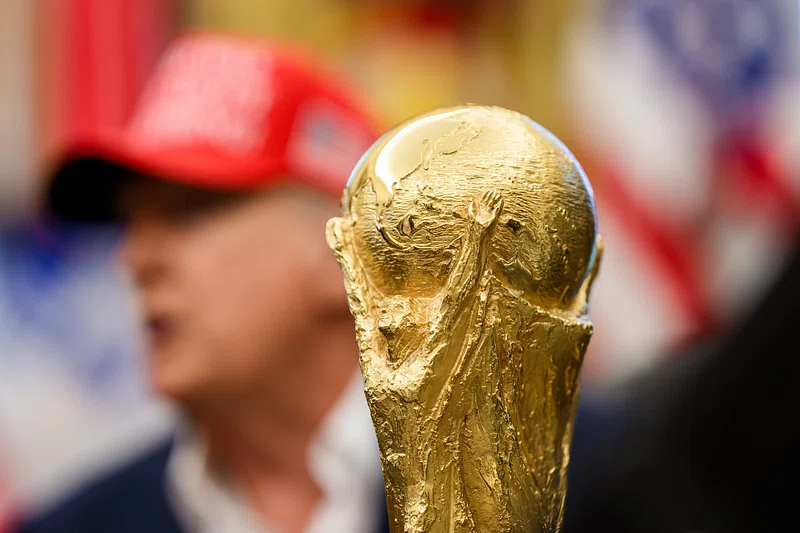
The World Cup has returned, and for the next few weeks billions of people will do what football fans have always done. They will watch matches, debate decisions, celebrate goals, and move on with their day.
Most will not think about the economics behind the tournament. Yet the scale of money surrounding modern sport is now hard to ignore. FIFA expects to generate around $13 billion in revenue across the 2023–2026 cycle, almost double the previous period, with broadcasting rights making up the largest share.
Sport has always made money, but its role within the economy is changing. Clubs, leagues, and tournaments are increasingly treated not just as sporting institutions, but as assets. Investors buy stakes in teams, broadcasters compete for rights, and betting firms and data companies build businesses around the attention sport creates.
Are sports still just games, or are they now better understood as investments?
How Sport Became A Multi-Billion-Dollar Asset Class
For much of the twentieth century, ownership of a football club was often associated with local prestige. Owners certainly hoped their clubs would be successful, and in some cases profitable, but many teams were still deeply connected to the communities in which they operated. Football clubs were businesses, yet they were also civic institutions. Their value was often measured through local identity and sporting achievement rather than financial returns.
That picture has changed dramatically over the past few decades. One reason is that technology has expanded the audience for sport far beyond geographical boundaries. A club that once depended largely on supporters living within travelling distance of a stadium can now reach viewers across continents. A Manchester United supporter in Manchester, Lagos, Mumbai and New York can all watch the same match, buy the same merchandise and engage with the same brand.
That shift transformed the economics of sport. Investors began to realise that major sporting organisations possessed characteristics that were increasingly difficult to find elsewhere. They had globally recognised brands, highly loyal customers and predictable demand. Fans might stop using one streaming service and subscribe to another, but very few abandon the football club they have supported for decades.
From an investor’s perspective, that loyalty has enormous value. FIFA’s own finances provide an indication of how valuable these audiences have become. The organisation originally forecast $11 billion in revenue for the 2023–2026 cycle. That figure has since been revised upward to $13 billion. Television broadcasting rights alone are expected to generate more than $4.2 billion across the cycle. Hospitality and ticket sales are projected to contribute just over $3 billion. Marketing rights account for almost another $3 billion.
Those figures help explain why sport increasingly attracts the attention of investment firms, sovereign wealth funds and institutional investors. They are not simply investing in football matches, tennis tournaments or Formula One races. They are investing in an asset that produces a reliable stream of attention from millions of people around the world.
This helps answer a question many fans ask when they see ever-higher valuations attached to clubs and leagues. Why are investors willing to spend so much?
The answer lies in the belief that live sport remains one of the most valuable forms of content in the modern economy.
Why Betting, Data And Media Rights Are Becoming As Important As The Game Itself
One of the defining features of modern media is that people increasingly consume content whenever it suits them. Television programmes can be streamed days after release. Podcasts can be downloaded and listened to during a commute. News articles can be read hours after publication.
Sport remains different. Most fans still want to watch a major match as it happens. They want to experience the uncertainty in real time. That makes sporting events extraordinarily valuable because advertisers know viewers are less likely to skip coverage or wait until later.
This helps explain why broadcasting rights have become such an important source of revenue. FIFA’s revised budget projects nearly $3.9 billion in television rights revenue in 2026 alone, representing approximately 44% of all revenue generated during the year.
The commercial significance of those audiences can already be seen during this World Cup. ITV recently described the tournament as a “six-week Super Bowl” for advertisers and expects advertising revenues around 30% higher than those generated during Euro 2024. Some advertising slots during England matches are reportedly capable of commanding prices of up to £300,000 for just thirty seconds.
The economics of broadcasting increasingly influence the structure of sport itself. The 2026 World Cup has expanded from 64 matches to 104 matches following the increase from 32 teams to 48 teams. More matches create more viewing hours. More viewing hours create more opportunities to sell advertising, sponsorships and broadcasting rights.
Alongside broadcasting has come the rapid growth of sports data and betting. A generation ago, statistics available to fans were relatively limited. Today, viewers can access player tracking data, expected goals models, heat maps and live probability estimates within seconds. Entire industries now exist to collect, process and distribute sporting information.
Betting markets have become deeply connected to this ecosystem. Sporting events no longer simply determine winners and losers. They also generate thousands of betting opportunities based on outcomes, player performance and in-game events. For many viewers, the experience of watching sport now includes tracking odds and probabilities alongside the action itself.
What emerges is an environment in which sport is simultaneously a contest between teams, a media product, a source of advertising inventory and a stream of commercially valuable data.
The game remains at the centre of the experience. Yet a growing number of businesses depend on everything surrounding the game.
What This Means For Fans
Whether this trend is positive depends largely on which aspect of sport people value most. There are obvious benefits. Increased investment has helped expand access to sport around the world. Production quality has improved dramatically. Fans can watch competitions from almost any location, often with analysis, statistics and coverage that would have been unimaginable a few decades ago. Growing commercial revenues have also helped support the development of women’s sport and expand investment in facilities and competitions. FIFA argues that revenues generated by the World Cup allow it to fund football development programmes around the world.
At the same time, commercial incentives inevitably influence decision-making. When broadcasters, sponsors and investors contribute such large sums of money, their interests become increasingly important. Decisions about tournament formats, scheduling and presentation may be shaped by commercial considerations as well as sporting ones.
The current World Cup offers an interesting example. Hydration breaks were introduced primarily for player welfare because of concerns about summer temperatures in North America. Yet broadcasters quickly recognised that these pauses could also create valuable advertising opportunities. Analysts suggested that advertising inventory associated with these breaks could become extremely lucrative because of the scale of the global audience.
That example does not imply that every change is driven by profit. Nor does it mean commercial interests are necessarily harmful. What it demonstrates is how financial incentives increasingly sit alongside sporting considerations when decisions are made.
Many supporters are already familiar with the consequences. They encounter rising subscription costs as rights become fragmented across multiple broadcasters. They see growing volumes of advertising surrounding major tournaments. They watch competitions expand as organisers seek additional revenue opportunities.
Some fans welcome these developments because they deliver more content and broader access. Others worry that commercial priorities may gradually outweigh sporting ones. Both views contain an element of truth.
Who Takes Priority?
The financialisation of sport does not mean sport has lost its emotional appeal. Fans still care about moments rather than balance sheets. A last-minute winner generates excitement regardless of who owns the broadcasting rights.
Yet it is becoming increasingly difficult to separate the sporting experience from the economic system surrounding it.
Investors see valuable assets. Broadcasters see audiences. Betting firms see markets. Technology companies see data. Advertisers see attention. Each group depends on the same thing: people caring deeply about the outcome of a sporting contest.
The World Cup remains a football tournament. It is also one of the world’s most valuable media properties. Understanding modern sport increasingly requires understanding both realities at the same time.
💼 Unpacked
Financialisation
Financialisation is the process where financial markets, motives, and institutions become increasingly important in shaping how an industry operates. Instead of being driven mainly by production or service delivery, decisions are influenced by investment returns, asset values, and shareholder interests.
Broadcasting Rights
Broadcasting rights are the permissions sold by sporting organisations that allow television networks or streaming platforms to show live matches or events. These rights are typically sold for large sums because live sport attracts real-time audiences.
Asset Class
An asset class is a category of investments that share similar financial characteristics, such as stocks, bonds, or property. Investors group assets this way to assess risk and return. Increasingly, sports teams and competitions are being viewed in a similar way, as revenue-generating assets that can provide long-term financial returns.
Sports Data
Sports data refers to the collection and analysis of information generated during sporting events and sold to broadcasters, betting firms, teams and other organisations.
📣 Support The Fiscal Compass
If you found this insightful, consider sharing with friends or colleagues. For weekly economics-led takes on markets, policy, and macro trends, subscribe to The Fiscal Compass.
Follow along on social media for concise updates throughout the week:
Instagram: @thefiscalcompassofficial
X: @FiscalCompass.
LinkedIn: Vinay Meisuria
Sources
Revised Budget 2023–2026
FIFA Annual Report 2024
https://inside.fifa.com/official-documents/annual-report/2024/financials/revised-2023-2026-budget
2023–2026 Cycle Budget and 2024 Detailed Budget
FIFA Publications
https://publications.fifa.com/en/annual-report-2022/finances/2023-2026-cycle-budget-and-2024-detailed-budget/
2024 Revenue
FIFA Annual Report 2024
https://inside.fifa.com/en/official-documents/annual-report/2024/financials/2024-financials-in-review/2024-revenue
ITV Says World Cup Will Be a “Six-Week Super Bowl” for Advertising
The Guardian, 11 June 2026
https://www.theguardian.com/business/2026/jun/11/itv-world-cup-super-bowl-tv-advertising
World Cup Waterbreaks Offer Lucrative Opportunity for Broadcasters
Reuters, 10 June 2026
https://www.reuters.com/business/media-telecom/world-cup-waterbreaks-offer-lucrative-opportunity-broadcasters-2026-06-10/
FIFA Projects $14 Billion Revenue for 2027–2030 Cycle
Reuters, 19 March 2026
https://www.reuters.com/sports/soccer/fifa-projects-14-billion-revenue-2027-2030-cycle-2026-03-19/
Featured Image: World Cup trophy