
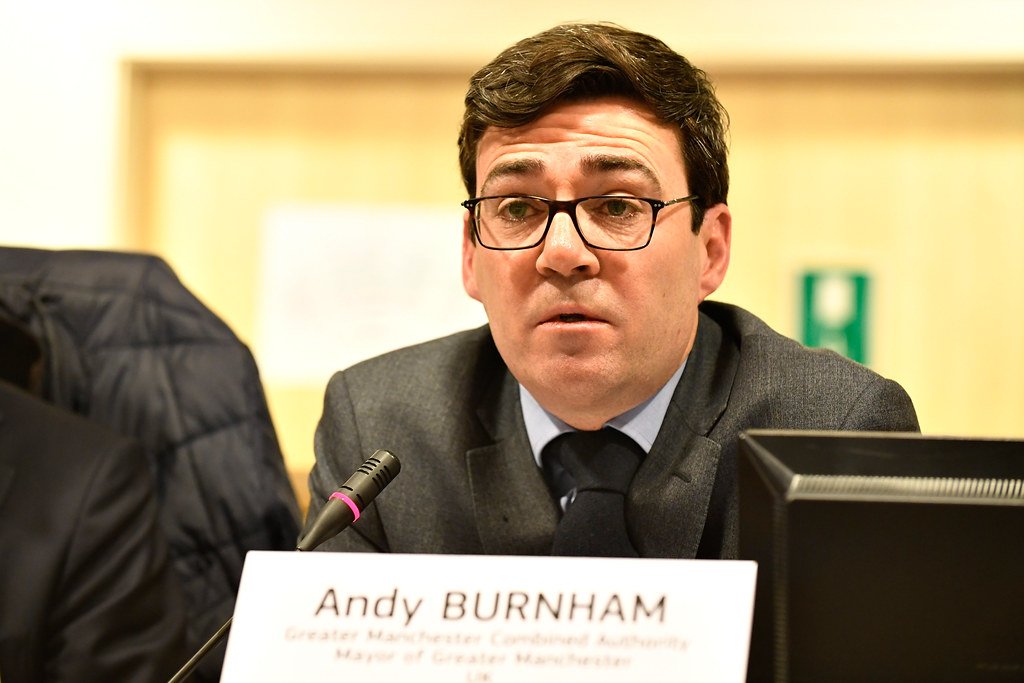
Three weeks ago, Andy Burnham was not even a Member of Parliament. Today, he is the only declared candidate to lead the Labour Party, and within weeks he could be sitting behind the desk at 10 Downing Street. Few political rises in recent British history have happened this quickly, and fewer still have happened to someone who had already tried and failed twice before. To understand how a man twice rejected by his own party for the top job is now poised to inherit it without even having to fight for it, you have to look at where he has been, what he actually believes, and how a swirl of resignations, by-elections, and backroom endorsements collapsed into what looks increasingly like a coronation rather than a contest.
Keir Starmer announced on 22 June 2026 that he would step down as Prime Minister, remaining in office only until Labour elects a successor. The trigger was a slow-burning crisis rather than a single scandal: a run of poor results for Labour in the May 2026 local elections, a sense among MPs that Starmer’s leadership had become a liability, and growing public appetite for an alternative. Burnham had spent months positioning himself as that alternative, even though he held no seat in Parliament at the time. To become eligible, he needed a route back into the House of Commons, and he found one through the Makerfield by-election, triggered by the resignation of the sitting MP and won comfortably by Burnham on 18 June. Within days, his most plausible rival for the leadership, Wes Streeting, threw his support behind Burnham instead of running himself, a move that political commentators say makes a genuine contest unlikely. If nobody else gathers the backing of at least 81 Labour MPs before nominations close on 16 July, Burnham could be Prime Minister by 17 July.
From a failed leadership bid to “King of the North”
Andy Burnham’s political career began in Parliament, not in Manchester. He was elected MP for Leigh, a former mining constituency in Greater Manchester, in 2001, and rose steadily through Labour governments under Tony Blair and Gordon Brown. He held a string of ministerial posts, including Chief Secretary to the Treasury, Culture Secretary, and finally Health Secretary under Brown from 2009 to 2010. When Labour lost power in 2010, Burnham ran for the party leadership and came fourth out of five candidates, a result that might have ended a less persistent political career. He tried again in 2015, this time finishing second behind Jeremy Corbyn, a result that placed him firmly in the party’s soft left, the broad internal grouping that sits between the Blairite centre and Corbyn’s more radical socialist wing.
It would have been easy, after two defeats, for Burnham to settle into a long career as a senior backbencher or shadow minister. Instead, in 2017, he left Westminster altogether and ran to become the first directly elected mayor of Greater Manchester, a newly created post with real powers over transport, housing, and policing across the ten boroughs that make up the city region. He won, and won again in 2021 and 2024, building a public profile that, by the end of his third term, arguably exceeded that of most members of the actual government. During the COVID-19 pandemic, Burnham became a national figure almost overnight when he publicly clashed with the Treasury over financial support for the North of England, earning the nickname “King of the North” in the press for his willingness to take on his own party’s government in defence of his region. It is worth sitting with the strangeness of that nickname for a moment: a Labour mayor became famous for fighting a Conservative government on behalf of people who were not even all his own voters, and it is that combination of regional loyalty and national visibility that has carried him to where he stands today.
As mayor, Burnham presided over what genuinely was a period of rapid change for Manchester. Tony Blair’s former political secretary John McTernan has pointed to Greater Manchester recording faster economic growth than any other UK region, London included, during Burnham’s tenure. He also delivered the Bee Network, a London-style integrated public transport system bringing buses, trams and eventually rail under unified control, and in 2025 Greater Manchester became the first place in 40 years to bring its bus services back under local public control through franchising rather than leaving them to private operators. These are not small achievements for a regional mayor working within a system that gives English city regions far less power than equivalent cities have in most other developed countries. But the growth story is not as simple as Burnham’s supporters sometimes suggest, and that complication matters for anyone trying to judge whether his Manchester record really does translate into a credible claim on national office. Bloomberg has reported that the regional boom has been concentrated heavily in Manchester’s city centre and more affluent areas, while towns on the outskirts of the city region, including Wigan, where Burnham was elected as an MP, have recorded GDP growth per head below the national average. In other words, the “Manchester miracle” has a real geography to it, and not every part of Greater Manchester has shared equally in the benefits Burnham points to on the national stage.
“Manchesterism” and what Burnham actually wants to do with power
Politicians who rise through devolved or regional roles often arrive in national politics with a slogan rather than a programme, and Burnham has certainly given his political philosophy a name: Manchesterism. He has described it in various speeches as “the end of neo-liberalism” and as “business-friendly socialism,” and in more concrete terms as a deliberate rejection of trickle-down economics in favour of policies that explicitly direct the proceeds of growth toward communities rather than assuming they will filter down naturally. It is worth being precise about what this means in practice, because the phrase alone tells you very little. The clearest example is the Bee Network itself: rather than leaving Manchester’s buses to private operators competing for profitable routes, Burnham’s authority took control of routes, timetables and fares, arguing that public coordination produces a better and more equitable service than market competition alone. He has made similar arguments about housing, pushing for greater regulatory power to intervene in the private rented sector, where, by his own account, around 40 percent of homes in Greater Manchester fall below the government’s decent homes standard.
On the national policy questions that would matter most if Burnham becomes Prime Minister, he has been fairly direct. He has said that water companies, and Thames Water specifically, should be brought into public ownership, and more broadly has called for energy, housing, water and transport to come under what he describes as “stronger public control.” This is not simply Burnham freelancing on an unpopular fringe position. YouGov polling from May 2026 found that most Britons think water and energy companies should be nationalised, which suggests Burnham’s instincts here are closer to mainstream public opinion than to the centrist economic consensus that has dominated British politics since the 1980s. He has also linked the present cost-of-living crisis directly to the legacy of Thatcherism, arguing that the deregulation and privatisation drive of the 1980s, including the Right to Buy scheme that allowed council tenants to purchase their homes, ultimately fed an unregulated private rental sector and pushed up the government’s housing benefit bill. Whether or not readers agree with that causal chain, it tells you something important about how Burnham thinks: he sees today’s economic strains less as the product of recent decisions and more as the slow-arriving consequences of choices made decades ago, which in turn shapes the kind of remedies he reaches for.
The choice he is reportedly weighing for Chancellor adds a revealing layer to this picture. As of late June 2026, that choice appears to sit mainly between Ed Miliband, a longtime ally who has pushed for Burnham’s rise for months, and a handful of alternatives including Wes Streeting, Shabana Mahmood, and Yvette Cooper. Miliband wants the role and brings genuine Treasury experience, but reports suggest many MPs doubt his appointment would reassure financial markets, partly over concerns that his strong commitment to net zero could conflict with the spending cuts and North Sea drilling expansion that advisers reportedly believe Burnham’s government will need. Tellingly, Burnham has surrounded himself economically with figures like former Bank of England chief economist Andy Haldane and former Treasury minister Jim O’Neill, both seen as lending credibility with traditional financial institutions even while advocating a looser approach to government borrowing for growth.
This combination of public ownership instincts and regional pride has earned Burnham comparisons to other left-leaning politicians who have built support around visible policy commitments, in the way that New York mayoral candidate Zohran Mamdani built his campaign around promises like cheaper buses. The comparison points to a broader pattern where politicians who campaign on visible, daily-life improvements tend to build a different kind of public trust than those who campaign on macroeconomic abstraction. That style of politics can struggle, though, once it meets the scale and constraints of national government.
Whether Burnham can translate that style of politics from a single city region to an entire country, with its more complex Treasury constraints and international obligations, is one of the open questions hanging over his prospective premiership.
How a coronation, not an election, could make him Prime Minister
The United Kingdom does not elect its Prime Minister directly. The public elects MPs to Parliament, and the leader of whichever party can command a majority in the House of Commons becomes Prime Minister. This means that when a sitting Prime Minister resigns mid-term, as Starmer has done, his successor is chosen not by the country but by the governing party itself, in this case the Labour Party, through its internal leadership rules. The next general election does not have to happen until 2029, so there is no legal requirement for the public to have any direct say in who replaces Starmer before then.
To contest for the Labour leadership, a candidate needs the backing of at least 81 Labour MPs, representing a fifth of the parliamentary party, simply to get onto the ballot. Reports suggest Burnham already has the support of something like 300 of Labour’s 403 MPs, an overwhelming majority that makes it extremely difficult for any rival candidate to clear the threshold, let alone mount a credible challenge. Wes Streeting’s decision to endorse Burnham rather than stand against him removed the one figure most observers considered Burnham’s most serious potential opponent. A handful of other names have been mentioned in passing, including Darren Jones and former minister Al Carns, but neither has committed to running. Nominations open on 9 July and close on 16 July. If Burnham remains the only candidate by that point, there will be no vote at all in any meaningful sense, and he could be confirmed as Labour leader and Prime Minister by 17 July. If a token challenger does emerge, the contest would likely run longer, with a result expected before Parliament returns from its summer break on 1 September.
It is also worth pausing on the public mood feeding into all this, because it explains why so few Labour MPs are inclined to resist what is happening. YouGov polling from late June 2026 found that Burnham consistently outperforms Starmer when Britons are asked who would make a better Prime Minister against the same set of opposition leaders, which is precisely the kind of data that persuades worried backbenchers to fall in line behind a coronation rather than risk a divisive contest. None of this is the same as winning a general election, and it would be a mistake to treat strong polling today as a guarantee of anything in 2029. Public opinion on hypothetical leaders shifts quickly once they are actually in office and forced to make unpopular decisions, as Starmer’s own trajectory demonstrates.
What this means going forward
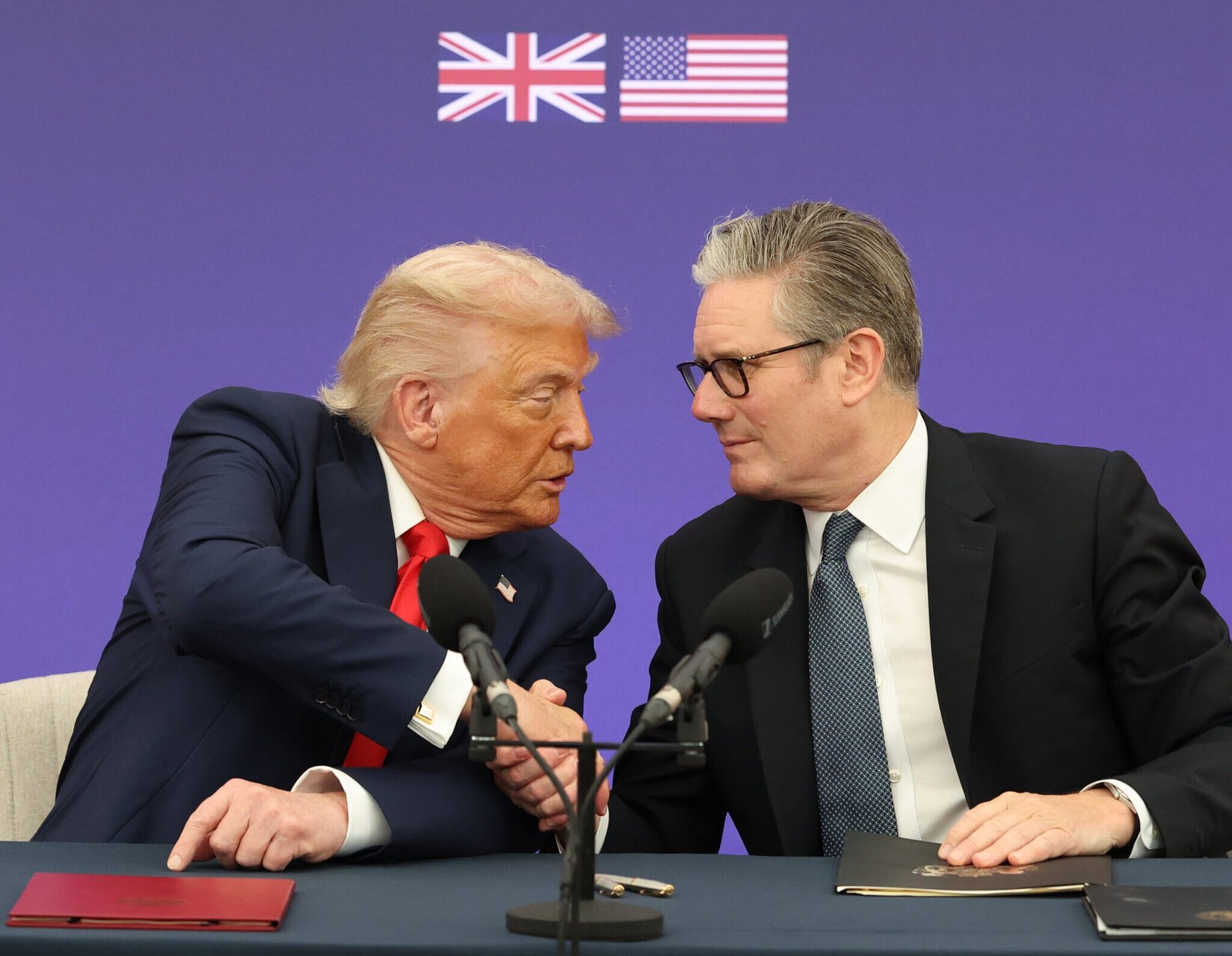
There is something worth sitting with in the fact that Burnham would become the UK’s seventh Prime Minister in roughly a decade, a pace of turnover that has no real precedent in modern British political history outside periods of war or constitutional crisis. Whatever one thinks of Burnham’s politics, that level of churn at the top of government has costs: continuity of policy suffers, international partners struggle to build long-term relationships with whoever currently holds the office, and voters can reasonably start to wonder whether changing the person in charge is being used as a substitute for changing the underlying problems those people are failing to fix. Burnham himself will inherit a strained relationship with Washington, where President Trump’s rhetoric toward Starmer had grown openly hostile in the weeks before his resignation, and managing that relationship will be an early test of whether Burnham’s regional political skills transfer to the considerably less forgiving arena of international diplomacy.
The more grounded question is what a Burnham premiership might mean for everyday decisions. His track record points toward a government more willing to intervene directly in markets that affect daily life, whether through public ownership of utilities, stronger regulation of landlords, or continued investment in public transport infrastructure. Whether that bet pays off, and whether a politician forged in the relatively contained world of city-region government can manage the far larger and more unforgiving machinery of Whitehall and the Treasury, is something only time will properly answer. For now, what’s clear is that British politics is about to be led by a man it twice told to wait his turn, at a moment when waiting no longer seemed to be an option anyone could afford.
💼 Unpacked
Soft left: A broad faction within the Labour Party positioned between the more centrist, market-friendly politics associated with Tony Blair’s governments and the more radical socialist politics associated with Jeremy Corbyn’s leadership. Soft left figures generally support a stronger role for the state in the economy and public services than Blairites do, while stopping short of Corbyn-era positions on issues like nationalisation’s scope or foreign policy. Burnham has been associated with this grouping since his 2015 leadership run.
Devolution: The transfer of specific powers from the central UK government in Westminster to regional or local bodies, such as the mayoralty of Greater Manchester. In England, devolution has typically covered areas like transport planning, housing strategy, skills funding and, in some cases, policing, while areas like taxation and major welfare policy remain controlled centrally.
Right to Buy: A policy introduced under Margaret Thatcher’s government in the 1980s that gave council house tenants the legal right to purchase their rented home, often at a significant discount. It remains one of the most consequential housing policies in modern British history, credited with expanding homeownership for millions but also blamed, including by Burnham, for shrinking the available stock of social housing and pushing more low-income renters into a private rental market with weaker protections and higher costs, a shift that has fed directly into rising government spending on housing benefit.
📣 Support The Fiscal Compass
If you found this insightful, consider sharing with friends or colleagues. For weekly economics-led takes on markets, policy, and macro trends, subscribe to The Fiscal Compass.
Follow along on social media for concise updates throughout the week:
Instagram: @thefiscalcompassofficial
X: @FiscalCompass.
LinkedIn: Vinay Meisuria
Sources
- “Andy Burnham prepares for a UK Labour leadership contest that may be a coronation,” PBS News / Associated Press — https://www.pbs.org/newshour/world/andy-burnham-prepares-for-a-uk-labour-leadership-contest-that-may-be-a-coronation
- “Andy Burnham, a former mayor, could become the U.K.’s next prime minister,” NPR — https://www.npr.org/2026/06/23/nx-s1-5866664/andy-burnham-a-former-mayor-could-become-the-u-k-s-next-prime-minister
- “What Has Andy Burnham, Britain’s Likely Next Prime Minister, Said About Trump?,” TIME — https://time.com/article/2026/06/23/what-has-andy-burnham-uk-prime-minister-lead-said-about-trump/
- “Andy Burnham’s Manchester Boom and the Areas It Left Behind,” Bloomberg — https://www.bloomberg.com/news/articles/2026-05-27/andy-burnham-s-boom-in-manchester-and-the-areas-it-left-behind
- “Mayor of Greater Manchester,” Institute for Government — https://www.instituteforgovernment.org.uk/explainer/mayor-greater-manchester
- “Who would make the best prime minister? June 2026,” YouGov — https://yougov.com/en-gb/articles/55048-who-would-make-the-best-prime-minister-june-2026
- “The Mayor,” Greater Manchester Combined Authority — https://www.greatermanchester-ca.gov.uk/the-mayor/
- “Can Burnham resist the siren call of the left?,” The Spectator — https://spectator.com/article/burnhams-odyssey/
- Featured Image: Andy Burnham, Flickr