

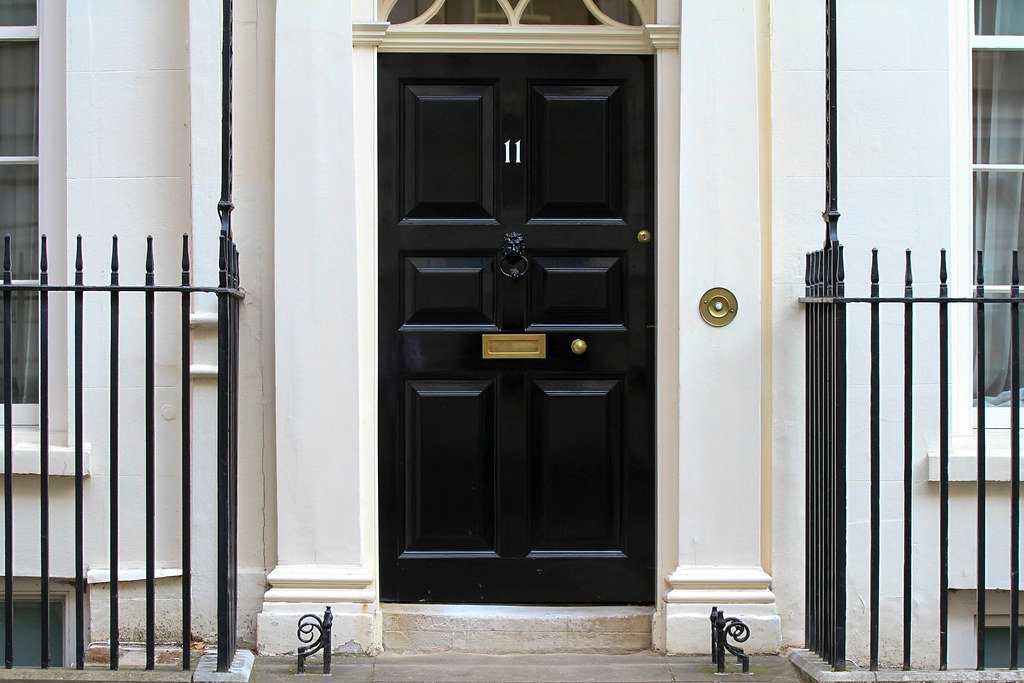
Every autumn brings the same ritual. A Chancellor stands at the despatch box, numbers are read aloud, and within hours commentators are picking apart who gained and who lost. This year it is Chancellor John Healey’s turn, delivering the first full Budget of Andy Burnham’s government on 28 October. Behind the headlines sits a much simpler and more uncomfortable truth: the government cannot spend what it does not have, and every choice it makes about where the money goes is really a choice about who bears the cost.
The government has more demands than money
Long before a single new policy is announced, the government already owes a great deal of money to a great many commitments. Debt interest alone cost around £109 billion in the last financial year, roughly 3.6% of the entire economy and about 8% of everything the government spends, simply to service borrowing that has already taken place. Defence spending is on a rising path too, committed to reach 2.5% of GDP by 2027 and expected to climb further toward 3% in the following years, with a longer-term NATO commitment of 3.5% by 2035 still to be funded.
Welfare spending will continue to grow too. An ageing population pushes up the cost of the state pension every year under the triple lock, while spending on incapacity and disability benefits has climbed from around £65 billion today toward a forecast £100 billion by the end of the decade. Add in a health service absorbing a growing share of day-to-day spending as demand rises, along with schools, policing and the rest of the public sector, and it becomes clear that a new government does not start with a blank sheet of paper. Most of what it will spend next year was already decided by promises, formulas and demographic trends set in motion long before this Budget was drawn up.
This is the starting point for everything that follows. Because so much spending is already locked in, and because tax revenue is bound by the size and health of the economy rather than by political will, the government is left with only three genuine options when it wants to do more. It can redistribute existing resources by taking from one area to fund another. It can borrow against resources the economy has not yet produced. Or it can try to expand the total pool of resources available, so that difficult choices become somewhat less difficult. Nearly everything debated in the run-up to a Budget, from tax rises to spending cuts to growth strategies, is really an argument about which of those three paths to take.
The fiscal rules put a limit on the choices
If the government wants to spend more without simply taking the money from somewhere else, it has four broad levers available. It can raise taxes, which brings in more revenue but can also affect how much people work, save, spend and invest, along with the political cost of asking voters for more. It can borrow more, which shifts the burden into the future and adds to debt interest costs down the line. It can spend less in some other area, prioritising one objective over another. Or it can try to grow the economy itself, since a larger economy generates more tax revenue even without raising rates, and makes existing debt easier to manage relative to the country’s income.
What limits how far the government can lean on any of these levers, particularly borrowing, are the fiscal rules it has set for itself. The stability rule requires the government’s day-to-day spending to be balanced by revenue by 2029-30, while the investment rule requires overall public debt to be falling as a share of the economy over the same period.
The gap between what these rules technically allow and what the government is currently on course to do is what economists call fiscal headroom. Fiscal headroom is not a pot of spare money sitting somewhere waiting to be spent. It is simply the amount of room left within self-imposed constraints, and right now that room is thin. The Office for Budget Responsibility put headroom at just £9.9 billion against the government’s main fiscal rule in its March 2026 forecast, a margin so narrow that independent estimates suggest it has since shrunk further as government borrowing costs have risen, with some analysts putting the current figure closer to £8 billion. A margin that small can be wiped out by a small rise in gilt yields or a modest downgrade to growth forecasts, which is exactly why every economic data release between now and 28 October is being watched so closely.
Someone has to lose out, unless we create more room
Put these two sections together and the shape of the problem becomes obvious. More defence spending means less available elsewhere, or higher taxes, or more borrowing. Higher welfare spending to protect pensioners and disabled claimants means the same set of trade-offs applies in a different direction. Even holding taxes steady is a choice, one that requires spending restraint or higher borrowing to pay for it. There is no version of this Budget in which every demand on the public purse is met without something else giving way, and honest political debate about the Budget is really a debate about which trade-offs a government is willing to accept and which it is not.
This is where growth changes the calculation, though not in the simplistic way it is sometimes presented. Saying that the answer to every fiscal problem is economic growth is nearly as unhelpful as saying the answer is simply to raise taxes, because it skips over the mechanism that actually makes growth useful. A larger economy means more income, more spending and more business activity, all of which tend to generate more tax revenue without the government needing to raise any tax rate. It also means a larger denominator against which existing debt is measured, so the same pound of debt becomes a smaller share of a bigger economy.
The OBR’s own forecasting illustrates how significant this effect can be. Its central forecast currently expects productivity growth to recover to around 1% a year in the medium term, with overall economic growth slowing to 1.1% in 2026 before picking up to an average of roughly 1.6% a year for the rest of the decade. But the OBR has also modelled what happens if productivity performs better than expected, for instance through a stronger boost from AI adoption. Under a scenario where productivity growth reaches 1.5% a year, government borrowing could end up around £50 billion lower by 2030/31, purely because the economy would be generating more tax revenue from the same tax rates.
This is why economists keep returning to productivity even when it feels like a less immediately gratifying answer than a tax cut or a spending pledge. Sustainable growth over the long term depends heavily on how much the economy can produce for every hour worked, and there is no single policy lever that fixes that on its own. Planning reform is one area repeatedly flagged by international bodies such as the OECD as holding back growth, since restrictive planning rules make it harder and slower to build the homes, transport links and energy infrastructure that a growing economy needs. Business investment is another, since firms that invest in better equipment, technology and training tend to produce more per worker over time. Skills and education matter too, particularly given long-standing gaps in the workforce that limit how effectively people can be matched to higher-productivity jobs.
None of these are quick fixes, but they represent the difference between a government that can only ever move money between departments and one that can gradually make the pie itself bigger.
What can actually break the deadlock
None of this means the government can escape scarcity altogether. There will always be more that defence chiefs, hospital trusts, pensioners and taxpayers would each like to see funded than the economy can support at once. What the government can do is change who bears the cost and when, by adjusting its priorities, its tax settings and how much it chooses to borrow. It can also, over a longer horizon than any single Budget, try to expand the economy’s capacity to generate income and tax revenue in the first place. That second option will not solve October’s arithmetic, but it changes the arithmetic of every Budget that follows.
💼 Unpacked
Fiscal headroom — The gap between what the government is currently forecast to do and the limits set by its own fiscal rules. It is not spare cash available to spend, but simply room to manoeuvre within existing constraints, and that room can shrink or grow with changes in interest rates, inflation or growth forecasts.
Fiscal rules — Self-imposed targets that limit government borrowing and debt. The current rules include a stability rule, requiring day-to-day spending to be covered by tax revenue within a set timeframe, and an investment rule, requiring total public debt to fall as a share of the economy over the same period.
Debt-to-GDP ratio — A measure of government debt expressed as a percentage of the size of the economy, rather than as a raw pound figure. It matters because a debt of, say, £3 trillion is far more manageable for a large, growing economy than for a small, stagnant one.
Productivity — How much economic output is produced for each hour worked. Higher productivity growth allows wages and living standards to rise without adding to inflation, and is widely seen as the main long-term route to a bigger tax base without higher tax rates.
📣 Support The Fiscal Compass
If you found this insightful, consider sharing with friends or colleagues. For weekly economics-led takes on markets, policy, and macro trends, subscribe to The Fiscal Compass.
Read every article from The Fiscal Compass, alongside our collection of free economics and personal finance tools on our website: thefiscalcompass.co.uk
Follow along on social media for concise updates throughout the week:
Instagram: @thefiscalcompassofficial
X: @FiscalCompass.
LinkedIn: Vinay Meisuria
Sources
- “UK fiscal outlook: September 2026” — House of Lords Library — https://lordslibrary.parliament.uk/uk-fiscal-outlook/
- “Autumn Budget 2026” — PwC UK — https://www.pwc.co.uk/budget.html
- “Current UK fiscal rules” — Institute for Government — https://www.instituteforgovernment.org.uk/explainer/current-fiscal-rules
- “What are government debt and debt interest?” — House of Commons Library — https://commonslibrary.parliament.uk/research-briefings/cbp-10842/
- “UK defence spending: composition, commitments and challenges” — Institute for Fiscal Studies — https://ifs.org.uk/publications/uk-defence-spending-composition-commitments-and-challenges
- “UK defence spending” — House of Commons Library — https://commonslibrary.parliament.uk/research-briefings/cbp-8175/
- “UK tax burden heading to uncharted territory with risk to growth” — AJ Bell (reporting OBR analysis) — https://www.ajbell.co.uk/news/articles/uk-tax-burden-heading-uncharted-territory-risk-growth-obr
- “Economic and fiscal outlook – March 2026” — Office for Budget Responsibility — https://obr.uk/efo/economic-and-fiscal-outlook-march-2026/
- “What does the UK spend on welfare – and how much will it rise?” — Border Telegraph (reporting OBR data) — https://www.bordertelegraph.com/news/national/25271710.uk-spend-welfare—much-will-rise
- “United Kingdom Economic Snapshot” — OECD — https://www.oecd.org/en/topics/sub-issues/economic-surveys/united-kingdom-economic-snapshot.html
Featured Image: 11 Downing Street, home of the Chancellor of the Exchequer, https://www.flickr.com/photos/usembassylondon/36560214560