
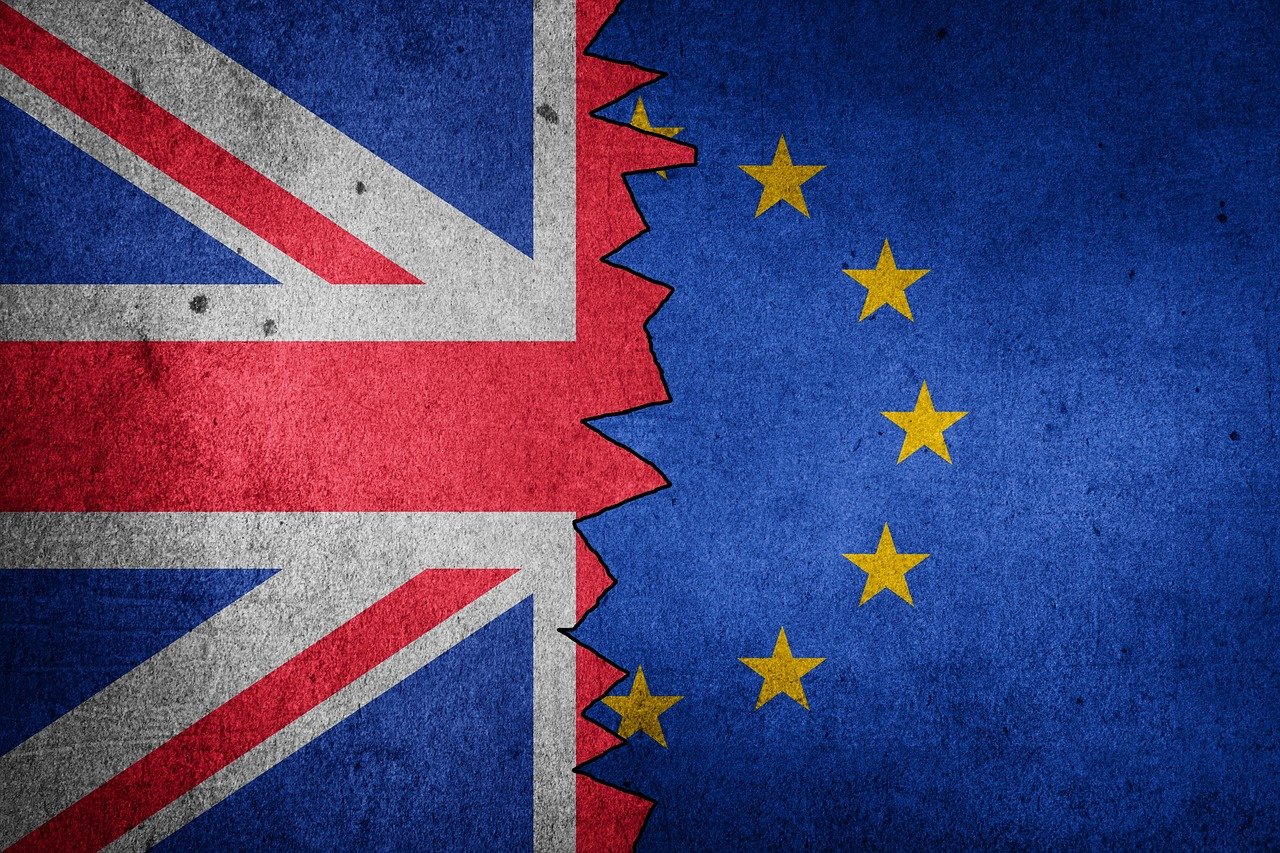
For much of the past decade, Britain’s relationship with the European Union appeared to be a settled question. The UK voted to leave in 2016, formally departed in 2020 and completed its transition out of the single market and customs union at the end of that year. Successive governments then focused on making the new relationship work.
That certainty is beginning to fade.
At Labour’s conference on 29 September, Prime Minister Andy Burnham said Brexit had done more harm than good and argued that Britain needs a settled long-term relationship with its largest market. He has suggested that the government could consider options ranging from a customs union to single market membership, while leaving open the possibility of eventually rejoining the EU. The Institute for Government describes this as a significant departure from the previous government’s more limited approach to improving the existing relationship.
Public opinion has moved too. YouGov’s June tracker found that 55% of Britons would support rejoining the EU, compared with 34% who would oppose it. Among those who voted Leave in 2016, 23% now support rejoining. Yet the figures also reveal how conditional that support is. Support falls sharply if Britain cannot retain its previous opt-outs, while only 29% support keeping the current relationship and 50% oppose it.
That leaves Britain in an unusual position. There is growing support for a closer relationship with Europe, but no clear consensus about what that relationship should look like.
Why closer ties could make an economic difference
The strongest economic argument for moving closer to the EU begins with something fairly mundane: paperwork.
The UK and EU still trade tariff-free in most goods under the Trade and Cooperation Agreement, but that does not mean trade operates as it did before Brexit. Businesses now face customs procedures, rules-of-origin requirements and other non-tariff barriers. These costs matter particularly for smaller firms because the administrative burden does not necessarily fall in proportion to the value of a shipment. A Federation of Small Businesses survey conducted shortly after the new trading arrangements began found that 23% of small exporters had temporarily stopped selling to the EU and a further 4% had stopped permanently.
The long-term economic consequences could be larger than the immediate cost of filling in forms. The Office for Budget Responsibility currently assumes that the post-Brexit trading relationship will reduce the UK’s long-run productivity by around 4% relative to remaining in the EU. Its underlying assumption is that UK trade will ultimately be around 15% lower than it would otherwise have been, with higher trade barriers reducing the gains from competition, specialisation and investment.
A 4% productivity reduction is an estimate of the level of productivity over the long run, not a 4% annual hit to economic growth. Likewise, restoring some of the trade that has been lost would not produce an instant equivalent increase in GDP. The benefit would emerge gradually as businesses respond to lower barriers, investment changes and resources are allocated differently.
This distinction matters for the public finances too. John Springford of the Centre for European Reform has estimated that the productivity effect of Brexit cost the Treasury roughly £40 billion in tax revenues between 2019 and 2024. Even if that estimate is accepted, it cannot be interpreted as £40 billion of annual revenue that a future Chancellor could recover simply by signing a new agreement. It covers a period in which the economy was also affected by the pandemic and other major shocks, and the precise contribution of Brexit is difficult to isolate.
The economic case for closer ties is therefore best understood as a long-term opportunity rather than a fiscal windfall. If lower trade barriers eventually raise productivity, the resulting increase in output would expand the tax base and give governments more room to make decisions about spending and taxation. The scale of that gain, though, depends heavily on how much integration Britain actually chooses.
A customs union would be particularly relevant to manufacturers, food producers and other businesses moving physical goods across the EU border. It would remove tariffs between the UK and EU and eliminate the need for businesses to prove the origin of goods traded between them. It would not remove every border check, and it would do considerably less for services.
That last point is important because Britain is not simply a manufacturing economy whose exports happen to cross the Channel. Services make up a large share of UK economic activity and exports, and the OBR has previously noted that the new barriers affecting services are an important part of its assessment of Brexit’s long-term productivity effect. A customs union could therefore reduce some of the costs created by Brexit without restoring the level of integration that existed before it.
Single market membership would go much further. It would reduce a wider range of regulatory barriers affecting goods and services, but it would also require the UK to accept a much closer relationship with EU rules. The European Economic Area model used by Norway illustrates the trade-off. It provides access to the single market while requiring acceptance of many EU rules, freedom of movement and financial contributions, without giving Norway a direct vote in the European Parliament or Council.
The potential economic gain therefore increases with integration, but so does the policy constraint.
What would Britain have to give up?
The economic benefits of closer integration are only half the calculation. The more Britain reduces barriers with the EU, the more difficult it becomes to maintain complete independence over the rules governing that relationship.
A customs union provides a straightforward example. Britain would gain from eliminating tariffs and some administrative barriers with the EU, but it would also have to apply the EU’s common external tariff to goods covered by the agreement. That would restrict the UK’s ability to set completely independent tariffs on those products and would narrow one of the freedoms Brexit was intended to provide.
The same principle becomes more significant under single market membership. Britain could regain much of the market access it lost, but it would have to align with a substantial body of EU rules. The difference is that the UK would be outside the institutions that formally make those rules.
That creates a difficult question about sovereignty. Leaving the EU gave Britain greater freedom to write its own regulations, but a country that wants to sell into the European market cannot simply ignore the rules governing that market. British companies selling products or services into the EU may still need to meet European standards even when Britain chooses a different domestic approach.
Technology provides a useful example. The EU’s AI Act is being introduced while the UK is pursuing a more sector-specific regulatory approach. For a British AI company operating exclusively in the domestic market, regulatory divergence can create room to experiment. For one selling into Europe, EU rules may still apply. The choice is therefore not simply between following British rules and following European rules. It can become a choice between having greater freedom to set domestic rules and having greater influence over the rules that govern access to Britain’s largest nearby market.
Full EU membership changes that calculation because the UK would regain a formal role in making those rules. It would also mean accepting substantially more obligations.
A newly acceding UK would not automatically recover the special arrangements it negotiated as a member state. The Institute for Government notes that the old UK budget rebate and opt-outs from the euro and other areas were products of previous negotiations. They could potentially be sought again, but there would be no guarantee that other member states would agree to them. New members are legally committed to the eventual adoption of the euro, although Denmark has an opt-out, and the UK’s previous position on Schengen would not automatically be restored.
The financial contribution would matter as well. Before Brexit, the UK’s net contribution to the EU budget was a little over £8 billion a year according to analysis by the Institute for Fiscal Studies. A future contribution would depend on the terms of accession and the size of the UK economy at the time, so treating the old figure as a current membership price would be misleading.
There is also a broader political cost. The EU does not operate as a menu from which Britain could select only the policies it likes. Full membership involves accepting the wider obligations of membership, including the legal framework underpinning the single market and the institutions that enforce it. Article 49, the process through which a former member would rejoin, requires unanimous agreement from member states and approval by the European Parliament as part of the accession process.
This is why the debate becomes less useful when framed simply as “rejoin” versus “stay out”. The economic and political trade-offs change at each level of integration.
The sovereignty trade-off is harder than it looks
There is a strong argument that Brexit gave Britain something valuable. Governments can now choose where to diverge from EU rules, negotiate trade policy independently and design domestic regulation without having to secure agreement within European institutions.
The question is how valuable that freedom is in practice. The UK’s ability to diverge is most useful when there is a meaningful reason to do so. A lighter regulatory regime could encourage investment or allow British businesses to develop new products more quickly. The difficulty is that divergence can also create additional costs for companies that want to operate in both Britain and Europe. Businesses may have to comply with two regulatory systems rather than one, or decide that serving the European market from the UK is no longer worth the additional expense.
The EU’s own regulatory performance is hardly beyond criticism. Mario Draghi’s 2024 report on European competitiveness highlighted regulation as a significant obstacle to investment and raised concerns about Europe’s ability to compete in areas such as artificial intelligence. The EU has since responded with measures intended to simplify regulation and delay some AI Act requirements.
Britain has performed better than the EU in some areas of technology investment. Stanford’s 2026 AI Index placed the UK third globally for private AI investment, behind the US and China. That does not demonstrate that Brexit caused the UK’s performance, nor does it prove that closer European integration would damage it. It does show that Britain has developed a technology sector that policymakers may want to protect when considering deeper alignment.
That calculation will differ between businesses. A manufacturer whose products cross the Channel several times before reaching customers may place a high value on removing customs barriers. A technology company selling primarily into Britain may value regulatory flexibility more highly. A financial services firm may have a different calculation again.
The same applies to individuals. The effects of a future relationship would not be distributed evenly. An exporter could benefit from lower trade costs, while a business that relies on importing goods from outside Europe could be affected by a common external tariff. A borrower might care about the implications of euro membership, while another household may place greater value on the ability to work and live freely across Europe.
That makes the political argument more complicated than the economic headline figures suggest. The UK would be choosing between different combinations of market access, regulatory independence, financial contributions and political influence.
The central irony is that complete independence from EU rules is difficult to achieve while maintaining close economic access to the EU. Britain can choose its own rules, but European businesses can do the same, and British firms selling into Europe must still meet European requirements. Full membership would reduce that particular problem by giving Britain a seat at the table, but only by accepting a much wider set of obligations.
The real decision is therefore about where Britain wants the balance between access and autonomy to sit.
💼 Unpacked
Customs union – An arrangement in which members remove tariffs between themselves and apply a common tariff to imports from countries outside the union. It limits the ability of members to set completely independent tariffs.
Single market – The EU’s framework for allowing goods, services, capital and people to move between participating countries under common rules. It removes many barriers that a customs union alone would leave in place.
Rule-taker – A country that follows another jurisdiction’s rules in order to access its market without having a formal vote in making those rules.
Trade intensity – The value of a country’s imports and exports relative to the size of its economy. The OBR uses changes in trade intensity when assessing the potential productivity effects of Brexit.
📣 Support The Fiscal Compass
If you found this insightful, consider sharing with friends or colleagues. For weekly economics-led takes on markets, policy, and macro trends, subscribe to The Fiscal Compass.
Read every article from The Fiscal Compass, alongside our collection of free economics and personal finance tools on our website: thefiscalcompass.co.uk
Follow along on social media for concise updates throughout the week:
Instagram: @thefiscalcompassofficial
X: @FiscalCompass.
LinkedIn: Vinay Meisuria
Sources
- Institute for Government, “Andy Burnham has opened the door to EU membership”: https://www.instituteforgovernment.org.uk/comment/andy-burnham-has-opened-door-eu-membership
- YouGov, “How strong is UK support for rejoining the European Union?”: https://www.yougov.com/en-gb/articles/54567-how-strong-is-uk-support-for-rejoining-the-european-union
- Office for Budget Responsibility, “How are our Brexit trade forecast assumptions performing?”: https://obr.uk/box/how-are-our-brexit-trade-forecast-assumptions-performing/
- Centre for European Reform, “An effective UK trade policy and a customs union are compatible”: https://mailings.cer.eu/node/7294
- Institute for Government, “Five things to know about a customs union”: https://www.instituteforgovernment.org.uk/blog/five-things-know-about-customs-union
- Institute for Government, “Article 49: rejoining the EU”: https://www.instituteforgovernment.org.uk/explainers/article-49-rejoining-eu
- House of Commons Library, “GDP international comparisons: Economic indicators”: https://commonslibrary.parliament.uk/research-briefings/sn02784/
- International Monetary Fund, “Press Briefing Transcript: World Economic Outlook Update, July 8, 2026”: https://www.imf.org/en/news/articles/2026/07/08/tr070826-weo-press-briefing-transcript-july-8-2026
- Institute for Fiscal Studies, analysis of the UK’s net contribution to the EU budget (publication 8226): https://ifs.org.uk/publications/8226
- Institute for Public Policy Research, “State aid rules and Brexit”: https://www.ippr.org/articles/state-aid-rules-and-brexit
Featured Image: Wikimedia Commons, https://commons.wikimedia.org/wiki/File:Eu_uk_referendum.jpg