
British diesel prices reached an average of 199.52p per litre in the week commencing 5 October, according to the government’s weekly fuel-price statistics. The rise comes amid the war involving Iran and disruption to energy supplies through the Strait of Hormuz, which have unsettled global fuel markets. Higher costs are squeezing motorists, hauliers and businesses that rely on road transport.
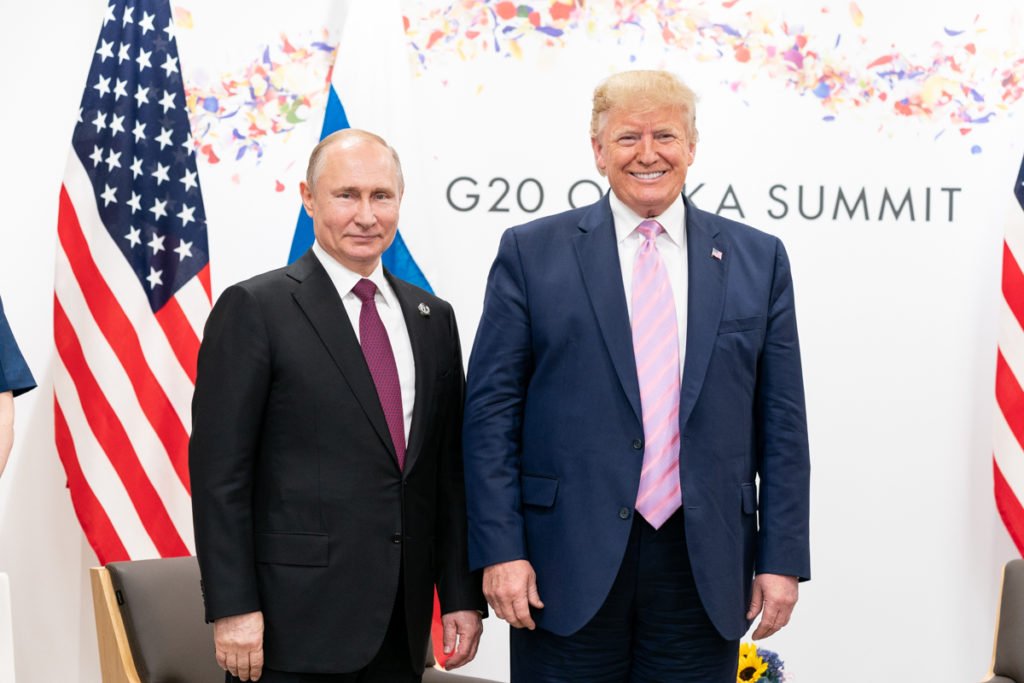
Against this backdrop, Donald Trump announced on 9 October that Russia would supply diesel to American and global markets. The US Treasury subsequently issued a temporary licence authorising transactions involving Russian-origin diesel until April 2027. The move reverses part of the restrictions imposed on Russian oil companies in 2025 to limit the revenue available to fund Russia’s full-scale invasion of Ukraine.
The UK has taken a different approach. In May, it introduced a new ban on refined oil products made from Russian crude in third countries, alongside a temporary licence to phase in the restrictions. The two responses expose a difficult policy choice: how should governments weigh the prospect of lower energy costs against the strategic objective of restricting Russia’s resources?
Why put economic pressure on Russia?
Russia’s invasion of Ukraine in February 2022 prompted financial restrictions, export controls and measures targeting its energy trade. Oil is particularly important because it generates revenue for the Russian state, helping fund public spending and the war effort. Sanctions aim to make that trade less profitable and restrict access to technology and finance.
The strategy does not depend on stopping every barrel of Russian oil from reaching a buyer. When established customers withdraw, Russia may have to redirect exports, accept discounts or pay more for transport and insurance. Those costs can reduce the revenue it receives even when export volumes remain high.
The Centre for Research on Energy and Clean Air (CREA), which tracks Russian fossil-fuel trade, estimated that Russia’s fossil-fuel export revenues fell 19% year-on-year in the fourth year of the invasion and were 27% below pre-invasion levels. Revenue from crude oil sales fell 18%, while export volumes declined by just 6%. The figures suggest that Russia has continued to sell substantial quantities of oil while earning less from them. They do not, by themselves, isolate the effect of sanctions from changes in global prices, exchange rates or other market conditions.
Russia has redirected trade towards countries including China, India and Türkiye, while alternative shipping arrangements have helped maintain exports. Sanctions can impose costs without fully preventing the activity they target. Their success therefore depends on how much revenue they remove, how difficult they make trade, and whether the resulting pressure advances the wider objective of constraining Russia’s ability to wage war.
Oil and refined fuels are traded internationally, so disruption to supply can affect prices even in countries that do not buy directly from Russia. The current rise in diesel prices cannot be attributed to Russian sanctions alone. The conflict involving Iran, disruption through the Strait of Hormuz and higher transport costs have placed separate pressures on supply.
When the cost comes home
The UK’s policy illustrates one way of managing that tension. On 20 May, the government introduced a ban on refined oil products made from Russian crude in third countries. A temporary licence allowed specified imports of diesel and jet fuel to continue while supply chains adjusted. The licence expires on 1 January 2027 and is reviewed every two weeks. The government has also said it will endeavour to give industry four months’ notice of a decision to revoke it. The intention is to phase in a new restriction while protecting supply, rather than abandon the policy of restricting Russian oil revenue.
The approach has nevertheless drawn criticism. In May, Conservative leader Kemi Badenoch accused the government of choosing to buy Russian oil, while Labour MP Emily Thornberry said Ukraine had been let down. The government argued that the licence was a temporary measure to protect supply as the new ban took effect. The disagreement is about whether the transition is a necessary safeguard or a delay that allows Russia to continue benefiting from trade.
The US has taken a different approach. On 9 October, the Treasury issued a temporary licence allowing transactions involving Russian-origin diesel that would otherwise be prohibited under US sanctions. The licence runs until April 2027, but unlike the UK arrangement, it specifies no regular review mechanism.
Trump said Russia would immediately supply more than 300,000 tonnes of diesel to American and global markets, followed by 500,000 tonnes in November and another one million tonnes shortly afterwards. He also announced a further three million tonnes, conditional on the state of Russian refineries. The Kremlin’s public readout said Russia was ready to supply oil and oil products to American and global markets but did not confirm the quantities. None of the announced volumes has been confirmed by Russia.
Trump described lower prices for Americans, particularly farmers, ranchers and truckers, as his “Greatest Priority”. Diesel is vital to freight and agriculture, so higher prices increase the cost of transporting goods and producing food. Additional supply could ease some of that pressure, especially in a market already disrupted by conflict and logistical constraints.
The proposed quantities are small relative to the US market. Reuters reported that 300,000 tonnes represents approximately 2.25 million barrels of diesel. Applying that conversion to the full 4.8 million tonnes gives around 36 million barrels. US Energy Information Administration data show average 2025 product supplied of distillate fuel oil, a proxy for consumption that includes diesel and heating oil, of about 3.9 million barrels a day. The announced total would therefore equal roughly nine days of US consumption if every barrel went to the US and were available for immediate use, although deliveries would be spread over time and some are intended for global markets.
Analysts also questioned whether the announcement would materially lower prices, noting that Russia normally exports much larger quantities of diesel when its refineries are operating. The proposed supply may add to a tight market, but it is unlikely by itself to resolve a sustained shortage. Any fall in wholesale prices would also need to pass through refining, distribution, transport, taxes and retailer margins before reaching consumers.
A further obstacle is Russia’s own export restrictions. Following attacks on its refineries and pressure on domestic fuel supplies, Moscow extended its diesel export ban for producers until 31 October 2026. The ban on exports by non-producers remains in place until 31 January 2027. These restrictions are a direct barrier to the proposed shipments. The US licence removes certain American sanctions barriers, but it cannot force Russia to lift its export ban or guarantee that the announced fuel will be delivered.
The potential benefit to Russia depends on whether Moscow permits exports, how much fuel is sold and the prices received. Ukrainian President Volodymyr Zelenskyy condemned the US move, describing it as an “investment in war”. His objection reflects the purpose of the restrictions: revenue from petroleum exports can help sustain Russia’s invasion. The US administration argues that the immediate priority is reducing costs for American households and businesses. The strength of the case for easing restrictions depends on the likely scale of the benefit and whether Russia can actually deliver the fuel.
How should governments weigh the trade-off?
First, will it deliver meaningful relief? The announced volume is equivalent to roughly nine days of US distillate consumption, spread across an unspecified delivery schedule. Russia has not confirmed the quantities, and its own export ban remains in place. The licence may make additional supply legally possible under US sanctions, but the available evidence does not establish that the fuel will arrive in the announced amounts or substantially lower consumer prices. On this test, the case for easing is weak.
Second, what does Russia gain? Any financial benefit depends on whether Moscow lifts its export restrictions and how much fuel is sold. Additional revenue would run against the wider objective of reducing the resources available to Russia’s war effort. The scale of that benefit remains uncertain, but the potential conflict with the purpose of sanctions is clear.
Third, can the policy be reviewed and reversed? The US licence has an expiry date, but it contains no stated regular review mechanism. Expiry alone does not ensure that the policy will be reassessed as market conditions change. The UK licence is reviewed fortnightly and also has a fixed end date. However, the government’s commitment to endeavour to provide four months’ notice of revocation may limit how quickly a review can translate into a change.
Sanctions exert pressure partly because the targeted government expects restrictions to persist. If they are relaxed whenever domestic costs rise, their future impact may become less predictable. Yet maintaining a measure that imposes substantial costs without delivering its intended strategic benefit can also weaken public support. Governments need to show that restrictions are achieving something commensurate with the burden they impose.
What is the price of pressure?
On the evidence available, the US decision makes a weak case for easing restrictions. The announced deliveries are modest relative to American demand, remain unconfirmed by Russia and are constrained by Russia’s own export ban. The scale of any consumer benefit is uncertain, while the potential financial gain to Russia cuts against the objective of limiting the resources available for its invasion of Ukraine.
That does not mean governments should ignore the cost of sanctions. The evidence that Russian fossil-fuel revenues have fallen shows that economic pressure can have an effect, while the continued flow of exports demonstrates its limits. Governments need to preserve pressure where it is effective and explain clearly when a temporary adjustment is justified.
For the US decision to be justified, the promised supply needs to materialise, deliver measurable price relief and be subject to a clear process of reassessment. Until then, the case for easing restrictions remains unproven.
💼 Unpacked
Economic sanctions — Restrictions on trade, finance or other economic activity intended to influence a government or organisation. They can reduce revenue, limit access to technology or make it harder for a country to pursue particular policies.
Supply shock — A sudden disruption to the availability or cost of a good. Conflict, refinery damage or restrictions on trade can reduce fuel supplies and push prices higher.
Product supplied — An EIA measure used as a proxy for US consumption of petroleum products. It estimates the volume supplied to the domestic market, but does not measure the amount consumed by each household or business.
Sanctions evasion — Attempts to circumvent restrictions through concealed transactions, intermediaries or alternative trade routes. Evasion can weaken sanctions by allowing goods, money or technology to reach their intended destination despite formal restrictions.
📣 Support The Fiscal Compass
If you found this insightful, consider sharing with friends or colleagues. For weekly economics-led takes on markets, policy, and macro trends, subscribe to The Fiscal Compass.
Read every article from The Fiscal Compass, alongside our collection of free economics and personal finance tools on our website: thefiscalcompass.co.uk
Follow along on social media for concise updates throughout the week:
Instagram: @thefiscalcompassofficial
X: @FiscalCompass.
LinkedIn: Vinay Meisuria
Primary sources and further reading
- Weekly road fuel prices — UK Department for Energy Security and Net Zero. Read the data
- UK to set end date for imports of Russian diesel and jet fuel via third countries — UK Government, 12 June 2026. Read the announcement
- General License 135: Authorizing Transactions Related to the Sale, Delivery, Offloading, and Importation of Diesel Fuel of Russian Federation Origin — US Department of the Treasury, Office of Foreign Assets Control, 9 October 2026. Read the licence
- Trump says Russia to supply diesel to US and global markets — Reuters, 9 October 2026. Read the report
- U.S. Product Supplied of Distillate Fuel Oil — US Energy Information Administration. View the data
- Russia extends diesel export ban for producers to Oct 31 — Interfax, 30 September 2026. Read the report
- Fourth year of full-scale invasion: Russian fossil fuel revenues tank to 27% below pre-invasion levels — Centre for Research on Energy and Clean Air, 24 February 2026. Read the analysis
- UK allows diesel, jet fuel imports from Russian crude via sanctions carve-out — Reuters, 19 May 2026. Read the report
- Oil’s new problem isn’t supply. It’s logistics — Reuters, 5 October 2026. Read the analysis
- Zelenskiy says letting Russia sell diesel to US is ‘investment in war’ — Reuters, via Investing.com, 9 October 2026. Read the report
Featured Image:
https://picryl.com/media/president-trump-at-the-g20-55c4a4?zoom=true