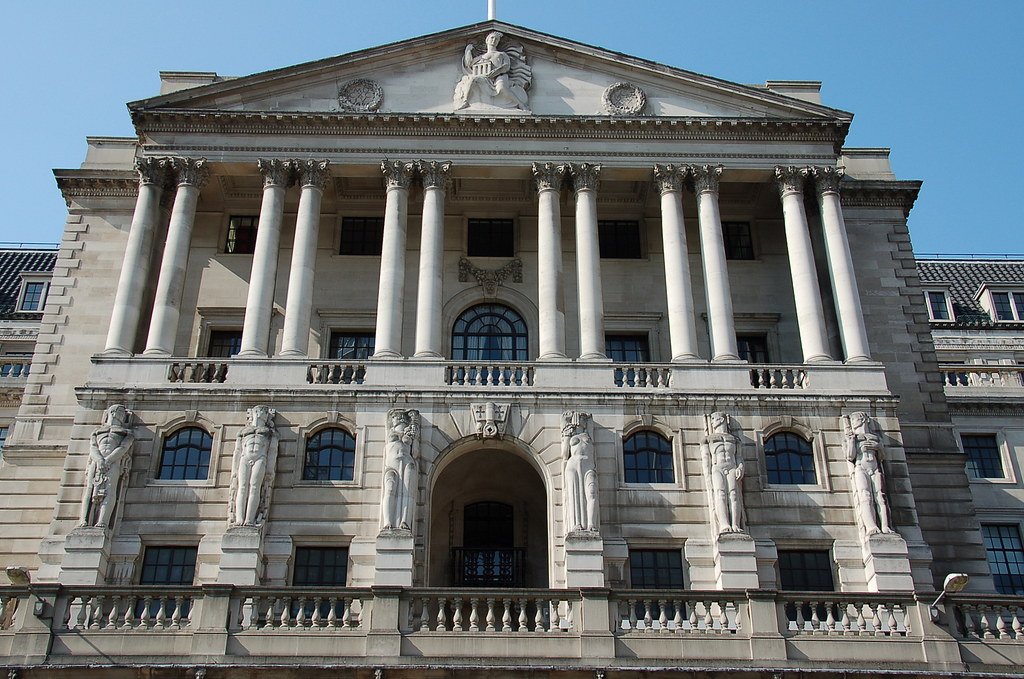


Twice in the past twelve months, the Bank of England has loosened rules built after the 2008 financial crisis to stop reckless lending from happening again. This month, it did so a third time, in the same report that warned about some of the most serious risks to financial stability the Bank has flagged in years. This is the clearest evidence yet of where the Bank’s thinking on risk has been heading, and what it might mean for anyone who borrows, saves, or simply lives in an economy that depends on banks lending sensibly.
A year of loosening the rules
The clearest starting point for this story sits in July 2025, when the Bank’s Financial Policy Committee first moved to relax the loan-to-income limits that had constrained mortgage lending since shortly after the crisis. Under the existing rule, lenders were required to keep the number of mortgages issued at 4.5 times a borrower’s income or higher to no more than 15% of their total new lending each year. The FPC’s change allowed individual lenders to exceed that 15% threshold on their own books, provided the lending sector as a whole still stayed within the aggregate cap.
At the time, high loan-to-income lending across the market sat at 9.7% in the first quarter of 2025, and the Bank forecast that giving individual lenders more room would likely push that figure to around 11% by the end of the year. Governor Andrew Bailey was candid about how much room this actually created, telling reporters that a meaningful shift in behaviour by lenders would represent quite a change. Deputy Governor Sam Woods put a number on the potential effect, estimating that the relaxation could enable up to 36,000 additional high loan-to-income mortgages every year.
By the following summer, the Prudential Regulation Authority was still actively reviewing the loan-to-income flow limit, and had extended a temporary modification allowing lenders to disapply the 15% cap altogether while that review continued, a stopgap due to run until the rule was formally rewritten.
That rewrite arrived in April 2026, when the PRA published a consultation paper proposing permanent changes to how high loan-to-income lending would be governed going forward. The justification leaned heavily on who the relaxed lending was actually reaching. First-time buyers had gone from making up an average of 44% of all mortgage volume since the original policy was introduced, to accounting for 54% of high loan-to-income lending specifically by the second quarter of 2025, evidence the Bank presented that the relaxation was reaching the people it intended to help rather than simply enabling riskier lending across the board.
Rather than treating that as a one-off correction, the Bank kept building on it. In December 2025, the Financial Policy Committee turned its attention away from mortgages and towards the banking system as a whole, revisiting a benchmark it had held since 2015 and reaffirmed as recently as 2019. The Committee cut its system-wide Tier 1 capital benchmark for UK banks from around 14% to 13% of risk-weighted assets. The Committee framed the change as evidence that the UK banking system had become resilient enough to support growth.
That brings the timeline to this month. On the seventh of July, the Financial Policy Committee proposed a different kind of loosening, this time targeting the capital that banks themselves must hold in reserve, through a rule called the leverage ratio, which requires banks to hold a minimum amount of capital against the total value of their assets, regardless of how risky or safe those individual assets are considered to be.
The Committee, working alongside the Prudential Regulation Authority, proposed moving towards a single releasable capital buffer framework, removing the countercyclical leverage buffer entirely, aligning the additional leverage ratio buffer with international standards, and reducing the minimum leverage ratio requirement itself from 3.25% to 3%.
In aggregate, the proposals would reduce the total capital UK banks are required to hold against this measure by around 20 basis points, or roughly 0.2 percentage points of their assets.
The Bank’s own Financial Stability Report noted that the leverage ratio had already become a binding constraint for three of the UK’s seven largest banks, and the largest domestic lenders affected, including Lloyds Banking Group, NatWest Group, Nationwide and Santander UK, would also see an additional capital buffer reduced to zero during a downturn under a further consultation the Bank plans to open later this year. Four separate rule changes in twelve months, spanning mortgages and bank capital alike, all moving in the same direction.
The case for making lending easier
The Bank has not been quiet about why it has taken this path, and the reasoning deserves to be taken seriously on its own terms before it gets complicated. On mortgages, the argument centres on access. Loan-to-income limits set after 2008 were designed to stop a repeat of reckless lending, but the Bank’s own data suggested the rule had also been quietly locking out a specific group of otherwise creditworthy borrowers, particularly first-time buyers who lack the inherited wealth or family support to save a large deposit and instead need to borrow a higher multiple of their income to get onto the property ladder.
The PRA’s own framing was that an increased supply of high loan-to-income mortgages could meet previously unmet demand from creditworthy individuals, including first-time buyers and those on lower incomes. The relaxation also followed a direct call from the UK government for regulators to find ways of supporting economic growth without undermining financial stability, meaning this was not a decision the Bank arrived at in isolation, but one shaped by political pressure to get more credit flowing through an economy that has struggled to generate consistent growth.
The specific problem the Bank is trying to solve is that capital buffers banks must hold at all times, with no ability to draw on them during a genuine crisis, can end up making a downturn worse rather than better. A bank facing a hard rule it cannot breach will simply pull back lending at the exact moment the economy needs credit flowing most. A releasable buffer framework is designed to let banks lean on their reserves during stress rather than freezing lending to protect a number on a spreadsheet.
An economy where first-time buyers can access mortgages more easily, where lenders face less friction, and where banks can keep extending credit during a downturn, has more housing mobility and holds up better under shock.
Given how much of the UK’s growth problem over the past few years has been tied to weak investment and constrained credit, a regulator willing to test whether some of its post-crisis caution had become excessive is not acting unreasonably.
The risks of making borrowing easier
The complication is that the Bank is not making this case in a vacuum, and it has been unusually direct about naming the risks sitting alongside its own decisions. The same July report that proposed loosening capital rules also described officials fretting about deepening threats from artificial intelligence reshaping trading and risk assessment in ways regulators admit they are struggling to monitor. They also mention the current geopolitical outlook continuing to inject volatility into markets as well as and leverage across the financial system rising rather than falling.
Crucially, this tension was not lost on the Bank’s own policymaking committee, where concerns were raised that the very changes being proposed could themselves increase risk in financial markets even as they aim to support lending during stress. That is a regulator acknowledging, in its own words, that it is choosing to accept more risk at a moment when it is simultaneously cataloguing new and unfamiliar sources of it.
A mortgage market where a growing share of lending sits at higher income multiples, sitting alongside a banking system holding a thinner capital cushion against its total assets, is a system with less slack in two places at once rather than one. If a downturn arrives while both of these adjustments are still bedding in, more households will be carrying larger mortgages relative to their income at precisely the moment banks have less spare capital to absorb losses, a combination that did not need to happen simultaneously and yet has.
The government pressure behind the mortgage changes also raises a genuine question about incentives, since growth targets and financial stability do not always point in the same direction. A regulator responding to political demand for growth is not automatically the same as a regulator concluding independently that its rules had become too conservative.
Is this the right call
The individual logic behind each change holds up reasonably well on inspection. Letting creditworthy first-time buyers access mortgages that a blunt income cap had been excluding them from is a defensible correction. A capital framework that lets banks use their buffers during a crisis rather than freezing lending to protect a fixed number is a genuine improvement on a design flaw in the original post-2008 rules.
However, three loosening decisions inside twelve months at the same moment the Bank of England is naming AI, geopolitics, and rising leverage as active concerns is a pattern that reads like a regulator leaning consistently in one direction regardless of the backdrop. The honest verdict is that this looks like sound policy pursued at a slightly uncomfortable moment, and whether that discomfort turns out to matter will be answered the next time the system is actually tested, and by then, this entire twelve-month pattern, not any single announcement, will be the relevant history.
💼 Unpacked
Loan-to-income (LTI) flow limit — a rule capping the proportion of new mortgages a lender can issue at 4.5 times a borrower’s income or higher, introduced after 2008 to prevent a return to unsustainable mortgage lending.
Leverage ratio — a rule requiring banks to hold a minimum amount of capital against the total value of their assets, without adjusting for how risky those individual assets are considered to be, acting as a simple backstop alongside more complex risk-weighted capital rules.
Releasable buffer — a portion of a bank’s required capital that it is permitted to draw down and use during periods of genuine financial stress, rather than holding completely untouched at all times.
Financial Policy Committee (FPC) — the Bank of England body responsible for identifying and acting on risks to the stability of the entire UK financial system, distinct from the Monetary Policy Committee, which sets interest rates.
📣 Support The Fiscal Compass
If you found this insightful, consider sharing with friends or colleagues. For weekly economics-led takes on markets, policy, and macro trends, subscribe to The Fiscal Compass.
Follow along on social media for concise updates throughout the week:
Instagram: @thefiscalcompassofficial
X: @FiscalCompass.
LinkedIn: Vinay Meisuria
Sources
- “Bank of England Relaxes Mortgage Lending Rules to Help Boost Growth” — Reuters / U.S. News — https://money.usnews.com/investing/news/articles/2025-07-09/uk-banks-can-increase-riskier-mortgage-lending-boe-says
- “Bank of England eases mortgage lending rules” — Retail Banker International — https://www.retailbankerinternational.com/news/bank-of-england-eases-mortgage-rules/
- “PS11/25 – Amendments to PRA Rulebook and FCA Guidance on the de minimis threshold for the Loan to Income flow limit in mortgage lending” — Bank of England — https://www.bankofengland.co.uk/prudential-regulation/publication/2025/july/amendments-to-pra-rulebook-fca-guidance-de-minimis-threshold-loan-income-policy-statement
- “Prudential Regulation Authority announces review of the Loan to Income (LTI) flow limit rule and offers interim modification by consent” — Bank of England — https://www.bankofengland.co.uk/prudential-regulation/publication/2025/july/pra-review-of-the-lti-flow-limit-rule-and-offers-interim-mbc-statement
- “CP6/26 – High loan to income lending” — Bank of England — https://www.bankofengland.co.uk/prudential-regulation/publication/2026/april/high-loan-to-income-lending-consultation-paper
- “BoE lowers tier 1 capital requirements to 13% of RWAs” — Finadium — https://finadium.com/boe-lowers-tier-1-capital-requirements-to-13-of-rwas/
- “BOE Proposes Easing Some Capital Rules Despite Growing Risks” — Bloomberg — https://www.bloomberg.com/news/articles/2026-07-07/boe-proposes-easing-some-capital-rules-despite-mounting-risks
- “Bank of England to relax leverage rules for UK banks” — Reuters / Yahoo Finance — https://finance.yahoo.com/economy/policy/articles/bank-england-relax-leverage-rules-102118423.html
Featured Image: Bank of England, Flickr